If you’re currently researching how to choose a UK wedding videographer, or building your wedding package, you have likely run into an overwhelming wall of traditional checklists. Wedding blogs, well-meaning friends, and venue coordinators all offer a variation of the same standard formula.
But here’s the truth: the wedding industry has evolved rapidly over the last few years, and much of the advice floating around online is outdated. It often overemphasises administrative convenience while ignoring the artistic and technical elements that actually dictate the quality of your final film.
To help you cut through the noise, let’s unpack four common wedding videography myths that you can safely ignore – and what you should focus on instead to ensure you get a timeless, cinematic memory of your day.
The short answer: hiring a combined photo/video package, choosing a venue’s recommended videographer, dismissing equipment quality, and prioritising social media follower counts are four pieces of advice you can safely set aside. Here’s why.
1. "You should hire a photographer and videographer from the same company"
The logic behind this myth sounds reasonable: an “in-house team” will naturally coordinate better, stay out of each other’s shots, and deliver a seamless experience.
In reality, professional wedding filmmakers and photographers are highly accustomed to working alongside new people every single weekend. It’s an industry standard. A brief, professional conversation prior to the wedding day is all it takes to align on schedules, angles, and key moments. In fact, working with an independent creative can often spark fresh energy and spontaneous ideas on the day, as two professionals bounce off each other’s unique perspectives.
Furthermore, booking a package deal because the team is “together” is no guarantee of a stress-free environment. Proximity does not always equal peace. I once witnessed an established husband-and-wife photography team have an argument right in the middle of a wedding day. The spectacular irony of a married couple having a workplace dispute at a celebration of marriage wasn’t lost on anyone present – but it was a vivid reminder that shared branding (and a shared household) doesn’t automatically guarantee harmony under pressure.
The reality is that when companies offer combined photography and videography packages, one discipline is typically their true expertise, while the other can end up feeling like a secondary consideration.
What matters more: Creative alignment. Instead of restricting yourself to a single company’s roster, you have the freedom to curate your own dream team. Look for an independent photographer and an independent videographer whose visual styles, cinematic production values, and storytelling approaches naturally complement one another. Read more about types of wedding photographers we work best with on our dedicated frequently asked questions page.
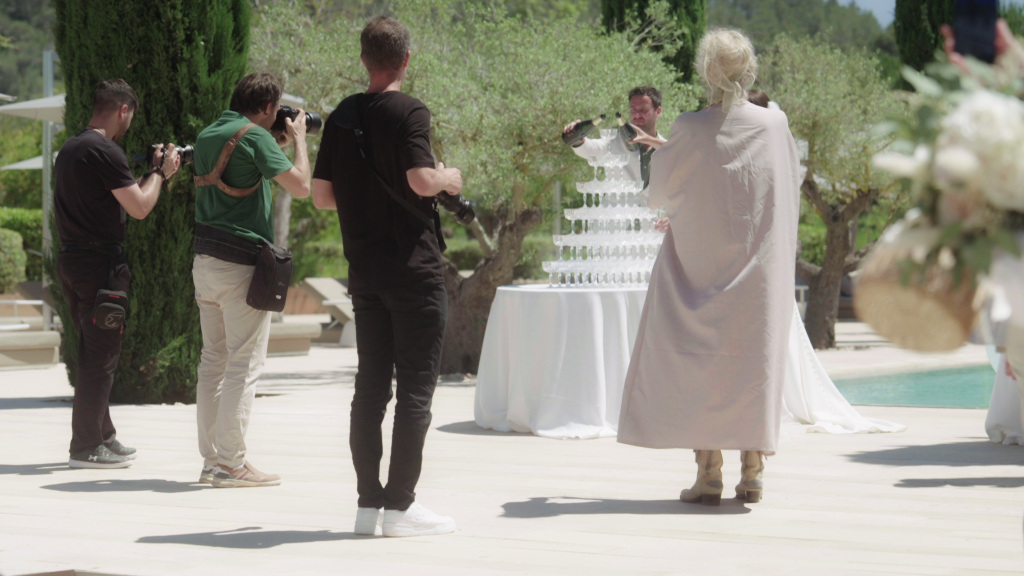
Videography and photography team coordinating so everyone can get their shot
2. "It's safer to choose a videographer from the venue’s recommended supplier list"
It’s incredibly tempting to default to the venue’s resident or recommended videographer. The common assumption is that because they “know the space inside out,” you will automatically get a superior film.
However, recommended lists exist for a variety of reasons that don’t always align with your artistic preferences. Sometimes these lists rely on long-standing commercial arrangements, commission structures, or simply historic relationships that haven’t been reviewed in years. Given the massive influx of incredible filmmaking talent over the last five years, a venue list that hasn’t been updated recently might limit your options significantly.
There’s also a creative paradox with extreme familiarity. A resident videographer who shoots at the same venue every weekend can easily fall into a “cookie-cutter” routine – filming the exact same angles, at the exact same spots, at the exact same times of day.
By contrast, a filmmaker visiting a venue for the first time brings a completely fresh pair of eyes. They will typically arrive early to conduct a thorough site reconnaissance (a “reccy”), actively looking for unique compositions, interesting light pockets, and fresh perspectives that a regular supplier might overlook.
What matters more: Cast a wide net. Review the venue’s recommendations, but don’t limit yourself to them. If you fall in love with a videographer who hasn’t shot at your venue before, simply ask about their preparation workflow. A true professional will gladly dedicate time to scouting the layout and lighting in advance.
3. "The equipment doesn't matter at all - it's only how you use it"
This is a well-meaning sentiment often used to remind couples that a great eye beats expensive gear. And it’s true to a point: a master filmmaker with a basic camera will always make a more compelling film than an amateur with a Hollywood rig. But in a fast-moving, technically challenging environment like a wedding, the specific type of equipment being used plays a massive role in the final image and audio quality.
Some wedding videographers shoot on older hybrid mirrorless photo cameras. While highly capable, they face limitations in the unpredictable environments of a wedding day.
For instance, I choose to shoot on dedicated cinema cameras, specifically the Sony FX6. This isn’t just about a “pro” look; it offers distinct mechanical advantages that directly impact your film:
- Exceptional Low-Light Performance: Weddings frequently transition into dim churches, candlelit receptions, and dark dance floors. The FX6 utilises a dual-base ISO system that captures clean, pristine footage in near-darkness without distracting digital grain.
- Electronic Variable ND Filters: When moving quickly between inside and outdoors, this feature allows the filmmaker to adjust exposure seamlessly and instantly, without disrupting the cinematic depth of field or stopping the shot.
- Pristine Broadcast Audio: A film is only as good as its sound. Cinema cameras feature professional XLR inputs, allowing us to connect directly to high-grade wireless systems and broadcast microphones. This ensures your vows and speeches are captured with absolute clarity, isolating voices while eliminating ambient hiss and wind distortion.
Similarly, consider creative tools like gimbals (mechanised stabilisers). While there is a current industry trend toward purely handheld, documentary-style shooting, a hybrid approach is often best. Using a gimbal as a deliberate creative choice during moments like the couple’s shoot adds smooth, sweeping motion that can elevate the production value.
| Hybrid Photo/Video Cameras | Dedicated Cinema Cameras (e.g. Sony FX6) |
|---|---|
| Prone to noise/grain in low light | Dual-base ISO for clean, crisp low-light footage |
| May overheat and switch off after prolonged recording | Can record continually without interruption all day |
| No in-built ND filters | Seamless, built-in electronic variable ND filters |
What matters more: Don’t get bogged down in spec sheets, but do ask shortlisted videographers about their technical workflow for low light and audio. A company utilising dedicated cinema tools is far better equipped to handle the logistical surprises of a wedding day.
4. "Only consider videographers with a large social media following"
In the digital age, it’s easy to mistake a high follower count or a viral reel for a benchmark of professional quality. In reality, maintaining a highly active social media presence is a full-time job that often rewards quick, trend-driven, short-form editing.
True wedding cinematography relies on deep storytelling, careful pacing, and emotional resonance. These are qualities that don’t always translate into a 15-second algorithm trend. Because of this, many of the busiest and most talented filmmakers choose to focus their time entirely on editing client films rather than curating their Instagram grids. I’ve seen amazing wedding films from videographers with sub-200 followers.
Furthermore, a significant portion of couples prefer to keep their wedding films completely private. While they’re often happy to let a videographer share their film privately with prospective clients over email, they prefer not to have their personal moments broadcast to thousands of strangers online, or have their videographer filming behind-the-scenes content during their wedding. A lower follower count or a quiet feed could simply be a sign of a filmmaker who deeply respects client privacy.
What matters more: Rely on comprehensive reviews and request to see full-length highlight films privately. Judge a filmmaker by the emotional weight and technical execution of their actual client work, not by the number of likes on a grid post.

Most venues, like the immaculate Ca Na Xica in Ibiza, allow freedom to choose vendors
The Takeaway
At a glance, here is how the traditional myths stack up against what will actually impact your wedding film:
| Common Advice | Why It Doesn't Hold Up | What Actually Matters |
|---|---|---|
| In-House Packages | Independent pros collaborate seamlessly every weekend. | Stylistic Harmony: Choose separate photo/video pros whose styles complement each other. |
| Venue Recommendations | Lists can be outdated or based on commercial ties. | Fresh Perspectives: A fresh eye often finds unique angles and creative compositions. |
| "Gear Doesn't Matter" | High-end tools are essential for difficult lighting and sound. | Cinema-Grade Kit: Look for filmmakers using dedicated cinema bodies and pro audio gear. |
| Social Follower Count | Algorithms reward trends, not timeless storytelling. | Real Portfolios: Request to see full, private film examples and verified client reviews. |
Choosing the right videographer shouldn’t feel like navigating a rigid set of rules. Once you look past the standard industry assumptions, it becomes a much simpler, more rewarding process. Focus on finding a professional whose portfolio moves you, whose technical setup protects against the elements, and whose approach makes you feel entirely at ease. For a complete roadmap, dive into our comprehensive guide: “How to Choose the Right Wedding Videographer in 2026: The Ultimate Guide for UK Couples”, which features a completely free planning checklist.