Your first dance ends. The dance floor fills. And your videographer quietly starts packing up their gear.
For some couples, that feels exactly right. The story of the day is complete – the morning preparations captured, the ceremony filmed, the speeches documented, the couple portraits done. Everything that matters is safely recorded.
For others, some of the most important moments are still to come.
One of the most common questions couples ask when booking wedding videography is: “What time should our videographer stay until?”
And the honest answer is: it completely depends on the kind of evening you’re planning.
Most UK wedding videography packages include coverage until a few songs after the first dance. That works beautifully for a huge number of weddings. By that point, the emotional story of the day often feels complete. You’ve captured the anticipation of the morning, the ceremony, the speeches, the confetti, the couple shoot, and the start of the evening celebration.
But not every wedding follows the same rhythm.
Sometimes extending coverage later into the evening can genuinely elevate your wedding film and preserve moments you’d otherwise miss completely.
This guide will help you work out what’s right for your wedding.
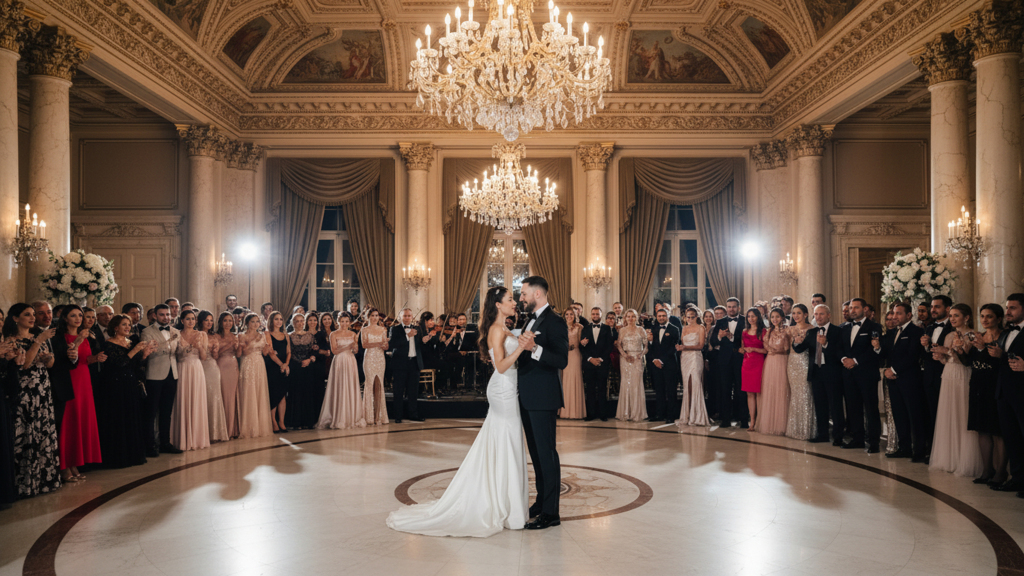
First dance at elegant London ballroom
Why Most Wedding Videographers Finish After the First Dance
If you’ve looked at a few videographers’ packages, you’ve probably noticed a common pattern: coverage starts during morning preparations, continues through the ceremony and speeches, and finishes shortly after the first dance. That isn’t arbitrary.
For many weddings, the first dance naturally acts as the final “chapter” of the story. It’s the moment the structured part of the day gives way to the party.
From a filmmaking perspective, it often creates a satisfying ending – emotionally, visually, and narratively. And in practical terms, the first 15-20 minutes afterwards are usually enough to capture a busy dance floor, guests celebrating together, the atmosphere of the evening building, and wide shots of the room in full swing.
In many cases, that’s all a couple really wants documented. After that point, some couples are happy to simply enjoy the night privately with friends and family, without cameras around. But equally, there are weddings where the evening becomes more important as the night unfolds.
That’s where extended coverage starts to make sense.
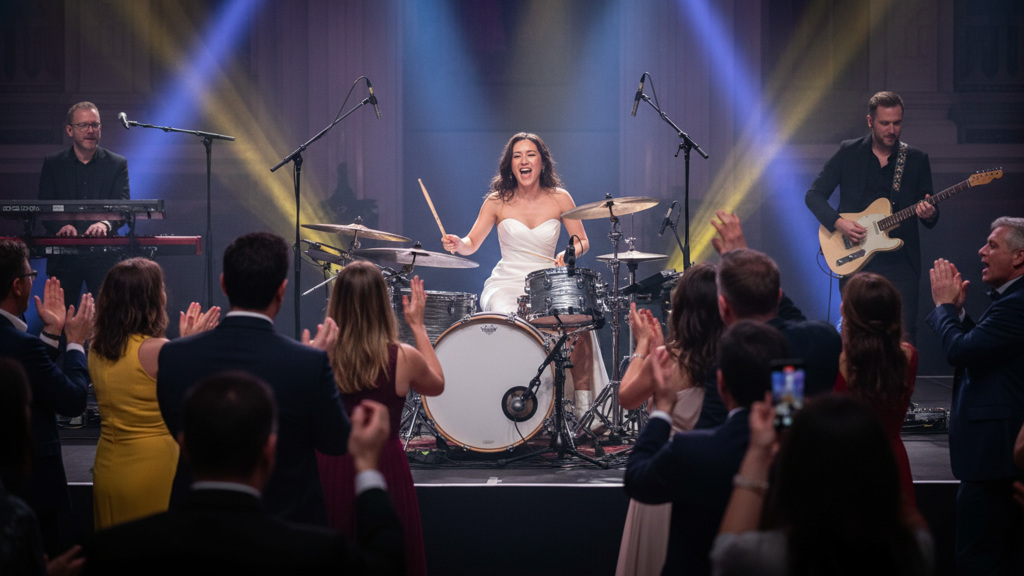
Bride joins the band and plays drums at her wedding
When It's Worth Booking Your Videographer Later Into the Evening
You Have Important Moments Planned After the First Dance
This is the most obvious reason, but also the most important.
If meaningful parts of your wedding are happening later in the evening, it makes sense to capture them.
That could include a father and daughter dance, a surprise performance, a live singer joining the band, a saxophonist joining the DJ set, a choreographed dance or perhaps a second outfit reveal.
I’ve filmed weddings where the groom surprised everyone by joining the band for a song, and another where the bride performed a piano piece later in the evening. Both became standout moments in the final film because they revealed something personal and unexpected about the couple.
These are the kinds of moments that genuinely add emotional depth and personality to a wedding film.
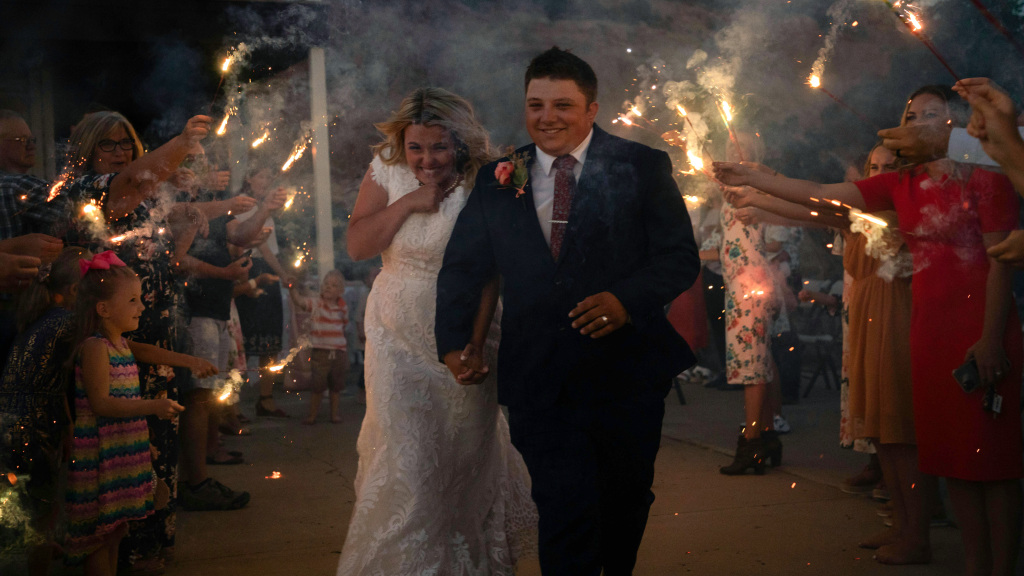
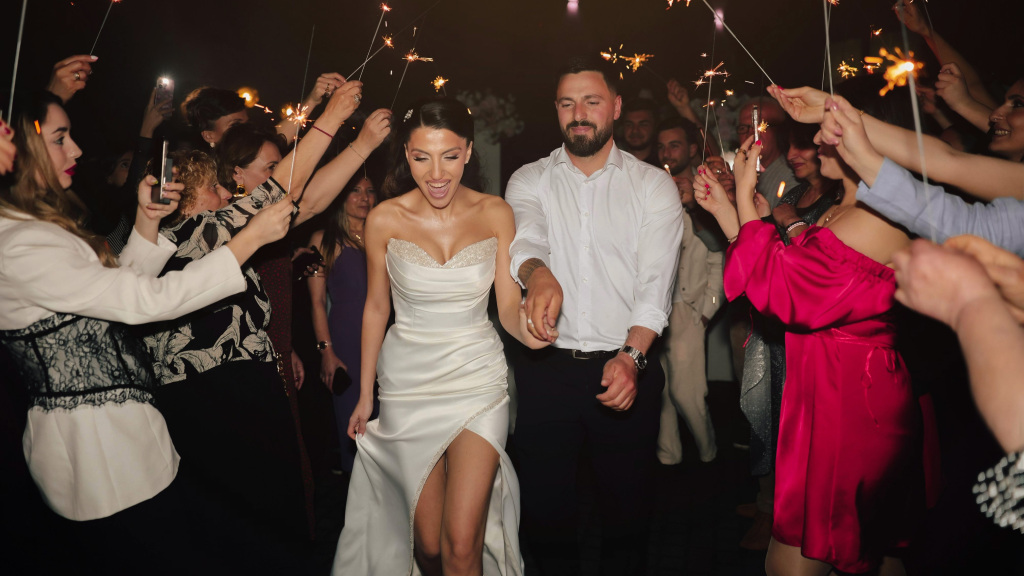
Wedding couple exit under a sparkler arch
Cultural and Religious Traditions Shape Evening Celebrations
The rhythm of evening celebrations varies hugely across different cultural and religious traditions.
At many UK weddings, the evening celebration after the first dance is relatively low-key – a dance floor, some music, and a relaxed atmosphere.
But for Greek, Jewish, Indian, Nigerian, Pakistani, and many other cultural weddings, the evening is when some of the most significant traditions actually take place.
I recently booked a traditional Greek wedding for next year where coverage continues for two hours after the first dance because many of the most meaningful dances and celebrations happen throughout the evening rather than at one specific moment.
Greek weddings often begin the reception with dances such as the Kalamatianos and Syrtos, where family and friends join hands and dance together in large circles, building an incredible atmosphere in the room. Later in the evening, traditions like the money dance and the Sirtaki bring even more energy and participation onto the dance floor.
There are also quieter, more emotional moments woven into the night, such as the Zeibekiko, a powerful solo dance performed by close friends or family while everyone gathers around to watch and support them.
These moments are not simply extra entertainment added onto the end of the wedding. They are a huge part of the celebration itself, and often some of the most meaningful memories from the entire day.
The same is true for many weddings where music, dancing, and shared family traditions continue well into the evening and play a central role in how the day unfolds.
If evening traditions are a significant part of your wedding, it’s worth discussing extended coverage with your videographer early in your planning.
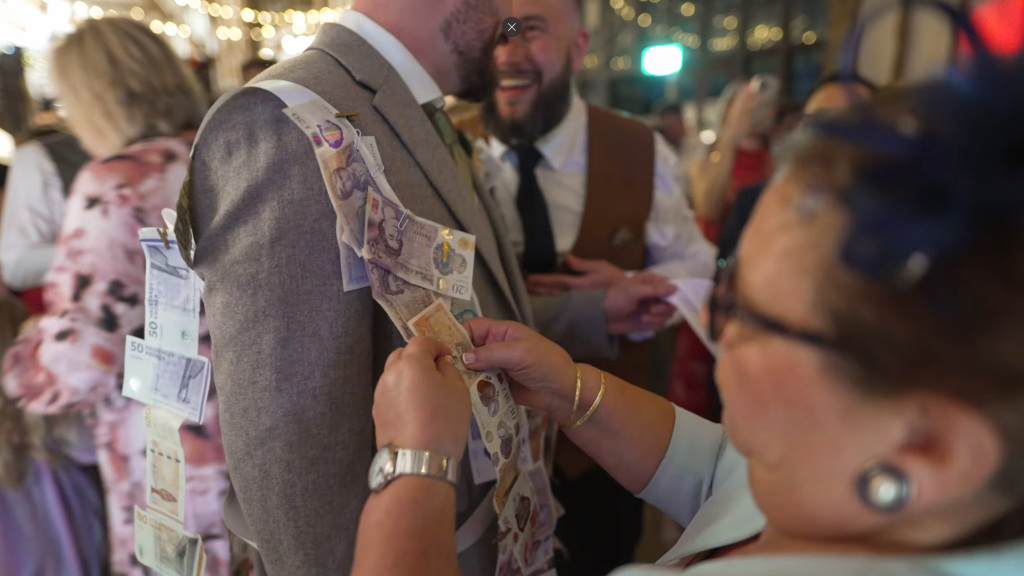
The Money Dance at a Greek wedding at Essendon Country Club
You've Invested Heavily in Evening Entertainment
Bands, DJs, lighting production, saxophonists, performers, live percussionists, indoor fireworks, confetti cannons, LED dance floors, roaming musicians – these things can completely transform the atmosphere of an evening reception.
And visually, they can look incredible on film.
That doesn’t automatically mean you need hours of extra coverage. Some bands are wonderful to listen to live, but the dance floor itself may not change dramatically after the first few songs.
But other evenings build momentum gradually and become more energetic as the night progresses. If you’ve invested significantly in creating a particular evening atmosphere, it’s worth thinking carefully about whether you’d regret not having more of that captured.
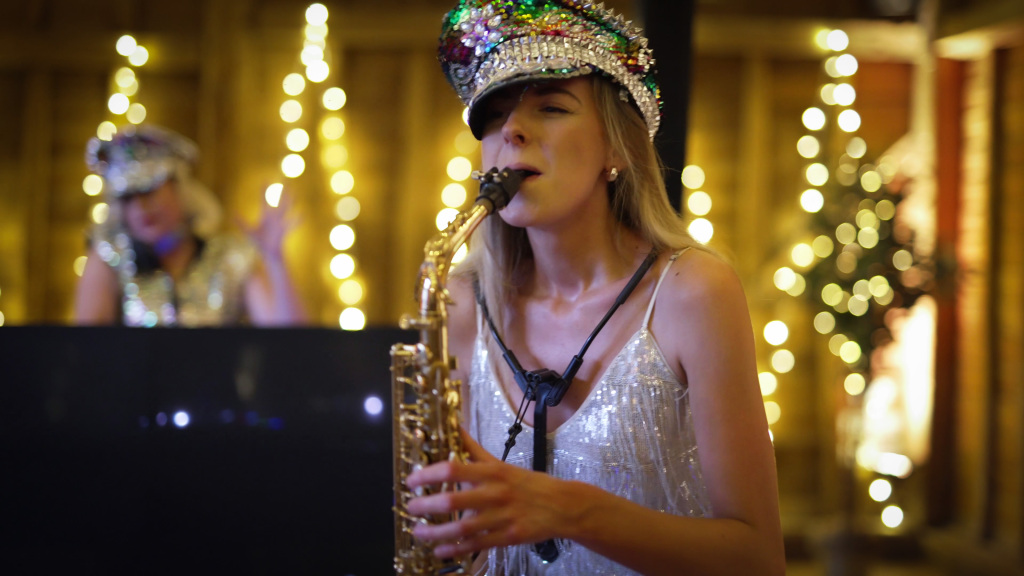
Saxophonist from Girls That Mix at Tewinbury
You're Planning a Sparkler Exit, Fireworks, or Special Send-Off
These moments almost always happen later in the evening and can create a beautiful ending to a wedding film.
A sparkler tunnel, a private fireworks display, or a planned night-time exit in a vintage car can all work brilliantly on camera because they naturally create a cinematic final scene.
That said, these moments usually need a little coordination. Sparklers need distributing and lighting, fireworks need safe positioning, and exits often require guests gathering in one place at the same time.
If you’re planning something like this, tell your videographer in advance so coverage can be timed properly around it.
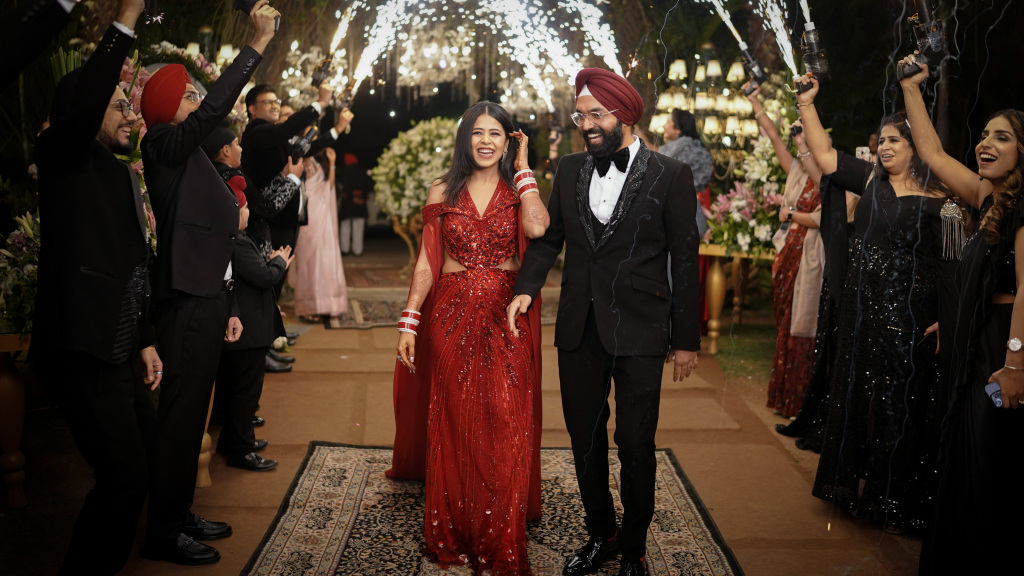
Wedding couple pass under firework arch
You Want a Golden Hour or Blue Hour Couple Shoot in June
This is something couples often overlook when planning summer weddings in the UK. Around the summer solstice, sunset can be close to 10pm.
If your first dance happens at 8pm or 8:30pm, your videographer may finish before the best evening light appears. That matters because golden hour and blue hour footage can completely change the feel of a wedding film.
Soft sunlight across the venue grounds, silhouettes at sunset, evening skies turning deep blue around the venue exterior – these moments can add huge cinematic value without feeling staged or over-directed.
Sometimes just 15 minutes outside together later in the evening can create some of the most visually striking footage of the entire day.
At summer weddings, it’s worth checking sunset times and thinking about whether you’d like evening light captured as part of your film.
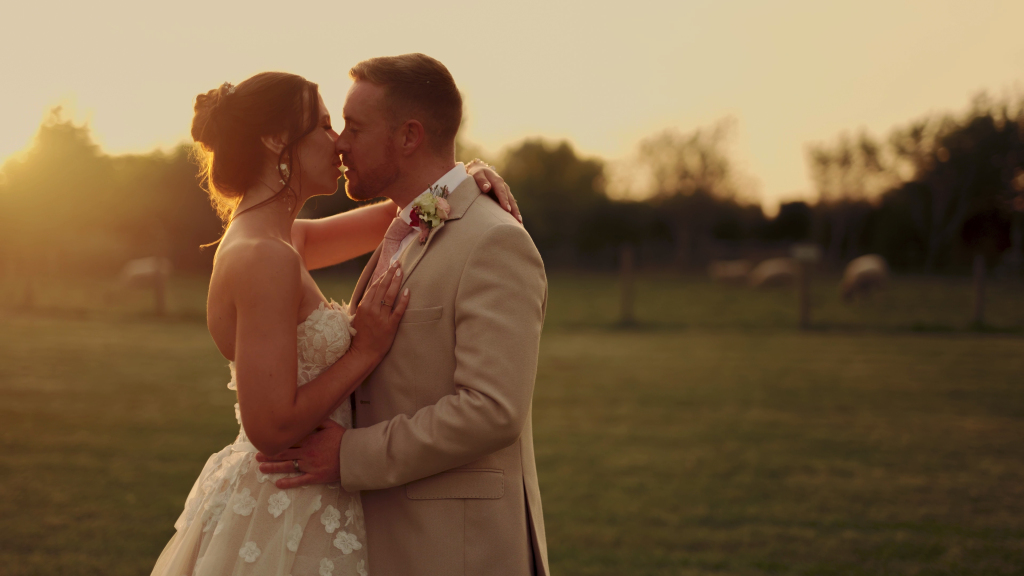
Golden hour shoot at South Farm, Hertfordshire
When You Probably Don't Need Extended Coverage
Not every wedding benefits from extending coverage. And that’s important to say honestly.
If there’s nothing major planned after first dance, the dance floor starts strongly immediately, evening food creates a natural lull, you mainly want the emotional story of the day documented, or you’d rather fully switch off and enjoy the party privately afterwards, then the standard finish time may already be exactly right for you.
In fact, many of the strongest dance floor moments often happen within the first few songs after the first dance, when the energy is fresh and everyone floods onto the dance floor together.
Bigger coverage windows do not automatically mean a better wedding film. What matters is capturing the moments that are genuinely meaningful to you.
Talk to Your Videographer About Your Actual Plans
One of the biggest mistakes couples make is choosing coverage purely based on what’s written in a package description. Packages are designed around what suits most weddings, not every wedding.
A good videographer will be happy to talk through your evening plans honestly and help you decide whether later coverage is genuinely worthwhile for your day.
Sometimes the answer will be: “Yes, absolutely stay later.” And sometimes it will honestly be: “I think the standard coverage already captures everything important.” That kind of conversation is valuable.
At Momentous Films, we rather couples book coverage that genuinely suits their plans than pay for hours they probably won’t use meaningfully. Our instant quotation builder allows couples to choose their own start and finish times.
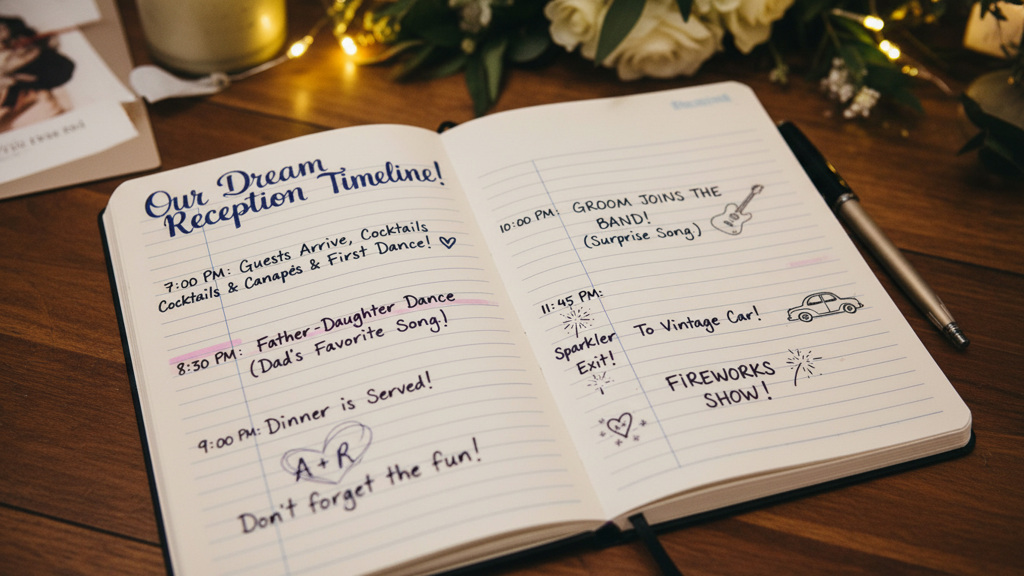
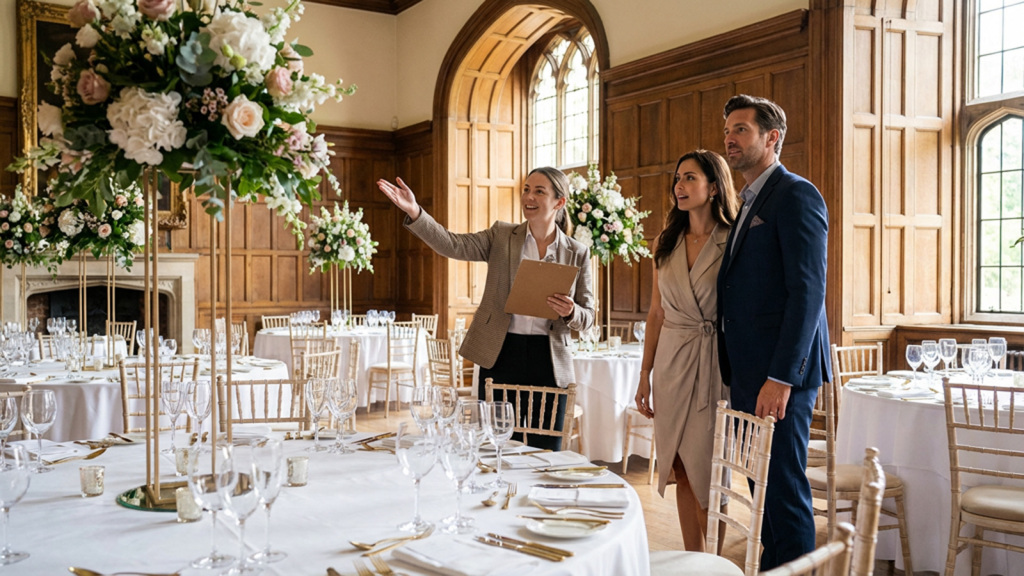
Couple plan their evening wedding schedule
What If Your Videographer Can't Stay Late?
Whilst personally I’m happy to film until the end of the night, some videographers may not be able to extend their coverage, particularly if they’ve been with you since morning preparations. That’s completely understandable – it’s a long day. For a videographer, their day could start several hours before you see them at your venue and once they leave at the end of the night, they will be backing up your footage, dropping off equipment, perhaps travelling some distance.
If extending coverage is important to you but your chosen videographer can’t accommodate it, there are a couple of options worth considering.
You could hire a second videographer to cover from the evening onwards. This gives you fresh energy for the later part of the day and can work well if you’ve got significant evening content you want captured. I wrote a separate article about when it’s worth considering hiring more than one videographer for a wedding.
Alternatively, you might find that adjusting your timeline slightly – perhaps having your first dance earlier – allows your videographer to capture the evening moments that matter most while still finishing at a reasonable time.
The key is having an open conversation early in your planning so you can work out what’s genuinely feasible.
Final Thoughts
There’s no universally correct finish time for wedding videography.
Some wedding films naturally reach their perfect ending during the first dance and the first burst of evening celebrations.
Others need another hour or two to capture the moments that truly define the night.
The key is not choosing the longest coverage possible. It’s understanding what parts of your evening genuinely matter most to you.
For some couples, that might be fireworks over the venue or a golden hour couple shoot just before sunset. For others, it could be late-night dancing, family traditions, or a special send-off at the end of the night.
And for many weddings, finishing shortly after the first dance is absolutely the right choice too.
The best wedding films don’t necessarily come from having cameras there the longest. They come from capturing the moments that feel most meaningful, personal, and true to the atmosphere of your day.
That’s the real question to ask yourselves:
“What parts of the evening would we be genuinely sad not to have captured?”
Once you know the answer to that, the right finish time usually becomes much clearer.