Try our instant quotation builder for your wedding in Spain
One of the biggest missed opportunities I see at destination weddings in Spain is this: the couple has planned a beautiful wedding, chosen a stunning location, and flown in family and friends from across the UK.
But the timeline, the food format, the ceremony structure, and the little details are almost identical to what they would have done back home.
There’s nothing wrong with that. Your wedding, your choice. But Spain has developed an entire culture of celebrating together that’s been shaped by its climate, its food, its long summer evenings, and a way of life built around outdoor gatherings. When you lean into it, something clicks.
Over the past few years I’ve had the privilege of filming weddings across Menorca, Mallorca, Ibiza and mainland Spain, for Spanish couples as well as destination couples travelling from the UK. Along the way I’ve picked up dozens of little traditions, ideas and practical touches that make weddings here feel distinctly Spanish.
Most don’t cost anything extra. Many aren’t centuries-old traditions. They’re simply thoughtful ideas that suit the climate, the venues, and the relaxed Mediterranean way of celebrating.
Here are some of my favourites.
Why Embracing Spanish Wedding Culture Makes a Difference
Most destination weddings happen the same way: the couple plans the wedding they’ve always imagined, then chooses a beautiful location to hold it.
That works perfectly well. But Spain is a country where the entire culture of celebrating together has evolved over centuries to suit the climate, the food, the long evenings, and a way of life built around outdoor living. When UK couples lean into that, the whole day feels different.
Guests are more comfortable. The evening feels more expansive. The food becomes an event rather than just a course. The timeline has a rhythm that feels as though it genuinely belongs where you’re celebrating it.
From a filming perspective, it’s also where I notice the biggest difference. The late evening light across the Balearics is extraordinary. Guests who’ve spent hours outdoors in the warmth are genuinely relaxed in a way that shows in footage. The atmosphere is different, and the films reflect that.
None of the ideas below require you to give up anything you want for your day. They’re simply about saying yes to what Spain naturally offers.
1. Why Do Spanish Weddings Start So Late?
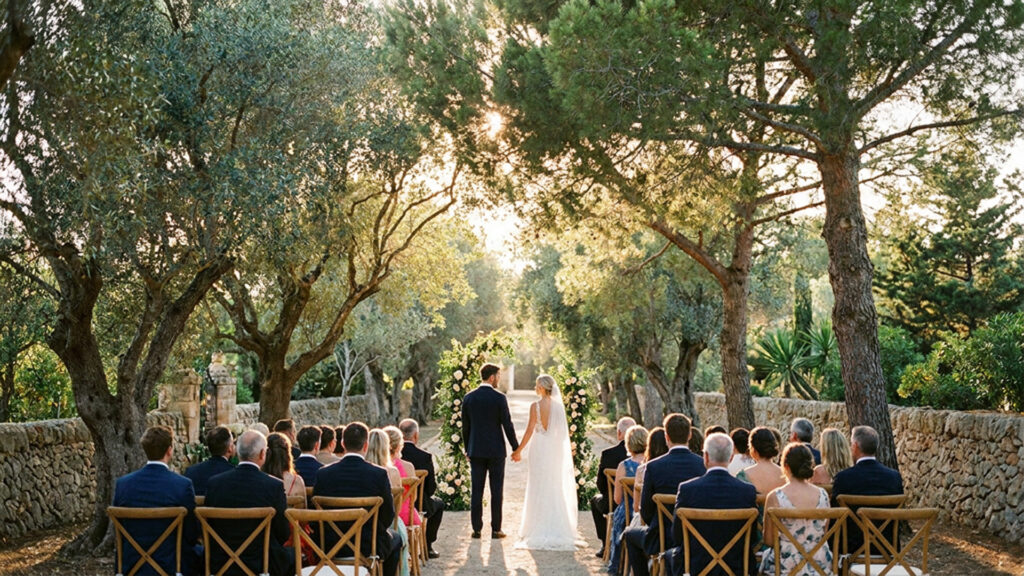
One of the first things that surprises couples visiting Spain is how late weddings often begin. During the summer, it’s completely normal for ceremonies to start around 7pm or even 7:30pm.
For couples used to UK weddings beginning at 1pm or 2pm, that can feel incredibly late. Once you’ve experienced it, though, it makes perfect sense.
At six o’clock on a July afternoon in Menorca or Mallorca, the sun is still intense. Waiting another hour or two makes the ceremony far more comfortable for everyone and rewards you with softer, more flattering evening light as a bonus.
A typical Spanish summer timeline might look something like this:
7:00pm – Ceremony
7:30pm – Cocktails and canapés
9:30pm – Dinner
11:30pm – First dance and party
From a filming perspective, the softer evening light is beautiful. The drinks reception also naturally blends into golden hour, giving you an opportunity for relaxed couple portraits without needing to disappear from your guests for long.
Steal this idea: Rather than trying to recreate a traditional UK timeline, embrace Spain’s later rhythm. Your guests will thank you for avoiding the hottest part of the day.
2. Design Your Ceremony Around Shade, Not Sunshine
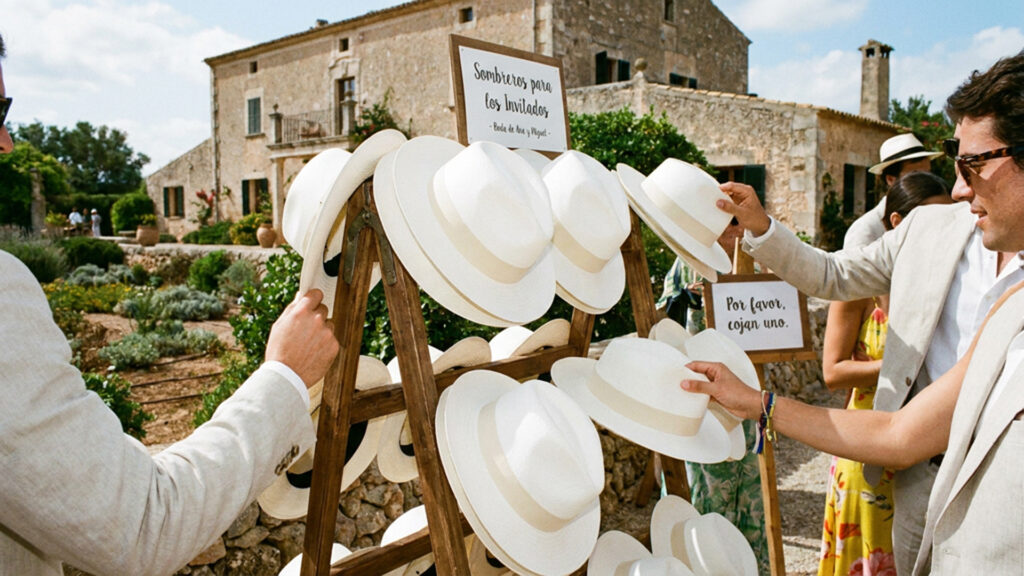
- Large baskets of woven straw hats or panama-style fedoras.
- Beautiful handheld fans.
- Cold water available as guests arrive.
These little details immediately tell your guests that you’ve thought about their experience, and they quickly become part of the visual character of the day too.
Steal this idea: Instead of emergency sunscreen by the door, welcome guests with woven Panama hats or fans they can use during the ceremony and take home afterwards.
3. Cocktail Hour Becomes Part of the Celebration
At many UK weddings, the drinks reception fills the gap while the room is turned around.
Spanish weddings often treat it very differently.
Cocktail hour is an event in its own right.
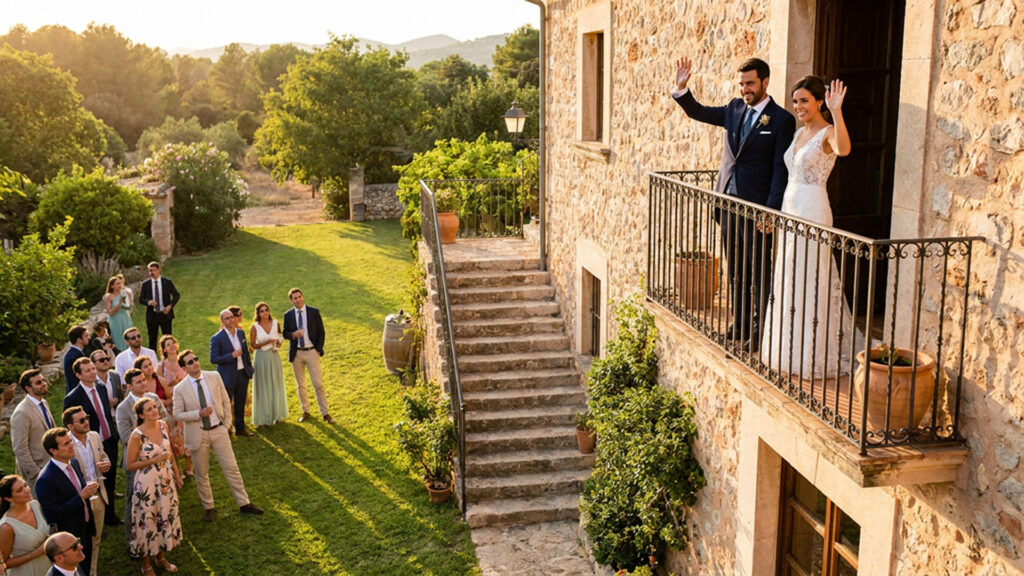
Guests mingle outdoors for much longer, often two hours or more, with live musicians, canapés arriving continuously and drinks flowing while everyone catches up with family and friends.
There’s no rush to get people inside. The conversation becomes part of the celebration.
From a filmmaker’s perspective, this is one of my favourite parts of the day because everyone has relaxed into the occasion. It creates wonderfully natural footage full of laughter, hugs and genuine interaction.
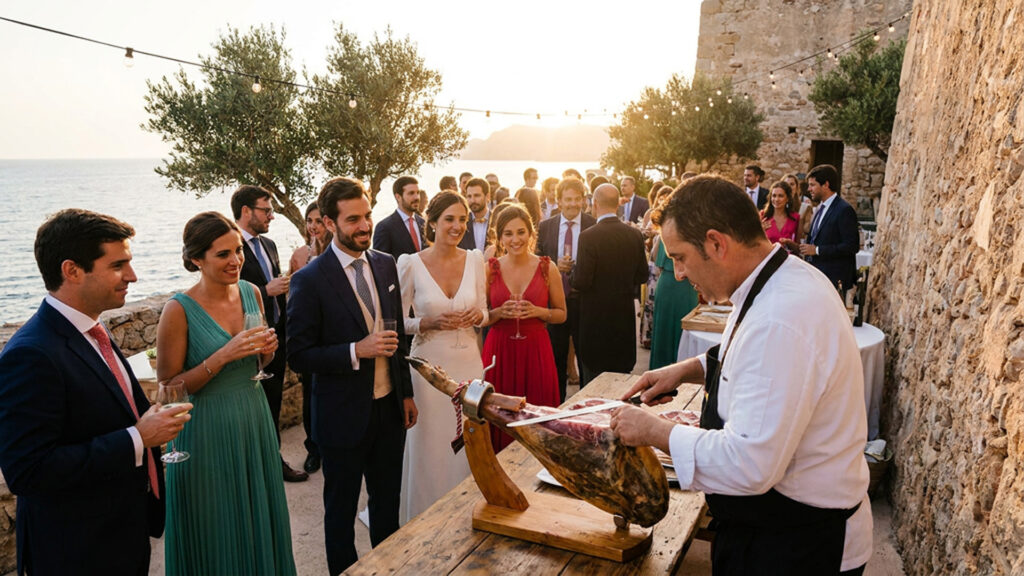
You’ll often find live food stations too, whether that’s freshly carved jamón, seafood or regional specialities that reflect where you’re celebrating.
Worth borrowing: Let your drinks reception breathe. Instead of treating it as a timetable gap, think of it as one of the highlights of the day.
4. Swap Flip-Flops for Espadrilles
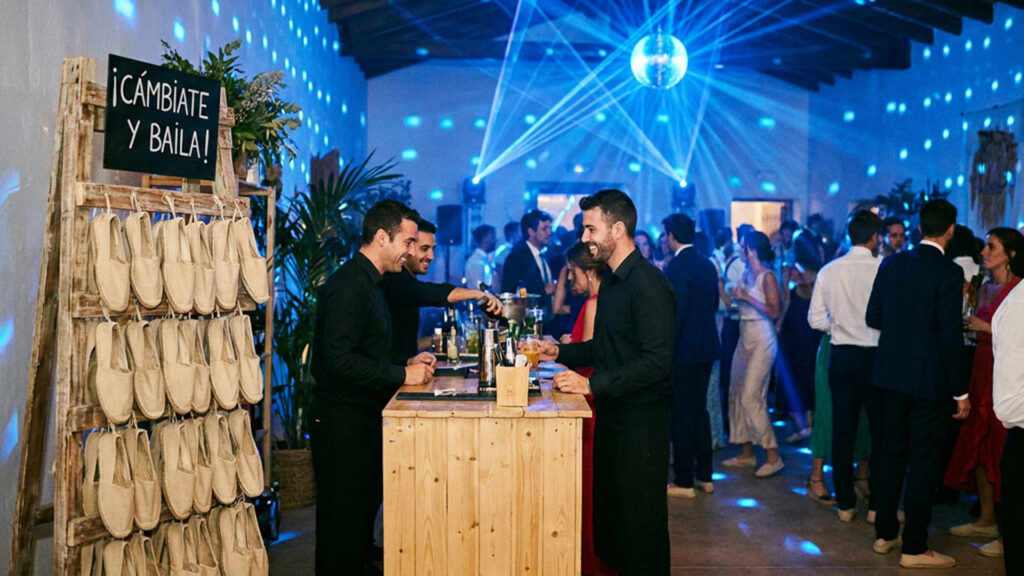
If you’ve been to a UK wedding recently, you’ve probably seen a basket of flip-flops appear as the dancing begins.
They’re practical. But if you’re getting married in Spain, there’s an opportunity to make the idea feel much more connected to where you are.
Espadrilles are lightweight canvas shoes with braided jute soles that have been worn around the Mediterranean for generations. They’re comfortable, stylish and feel perfectly at home at a Spanish wedding.
In Menorca specifically, you could even provide Abarcas: the island’s traditional handmade leather sandals. Not only are they practical for dancing, they also make a genuinely memorable wedding favour that many guests will continue wearing long after they’ve returned home.
They’re the kind of thing a guest couldn’t imagine receiving anywhere else. That’s the whole point.
5. Let Local Food Take Centre Stage
Spain’s food culture is one of the biggest reasons many couples choose to get married here, so don’t be afraid to lean into it.
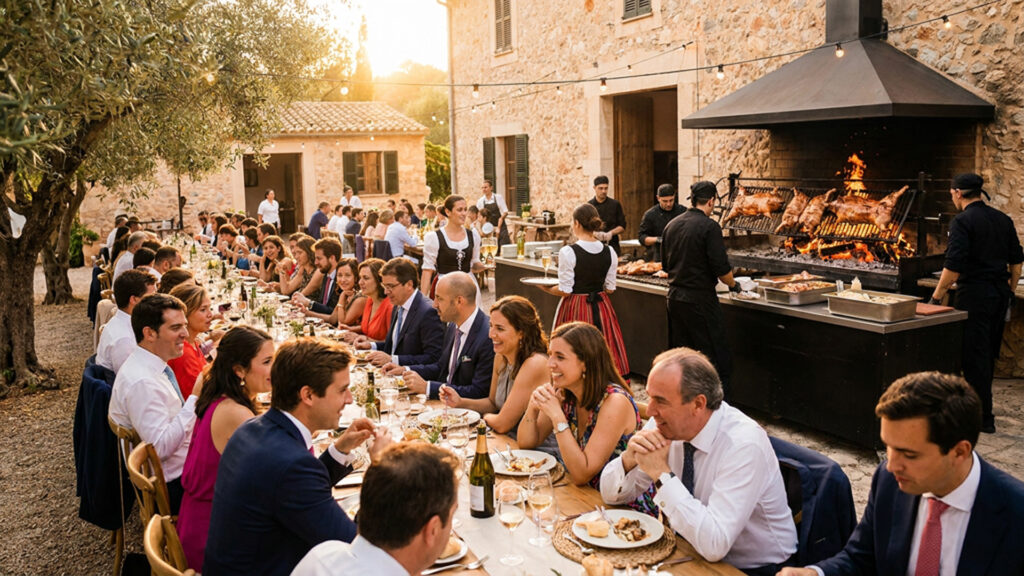
I’ve seen everything from chefs carving jamón throughout cocktail hour to giant paellas being prepared in front of guests, relaxed barbecue feasts, fresh seafood and long sharing tables that encourage conversation.
It feels very different to the traditional three-course wedding breakfast many UK guests are used to. The food becomes part of the entertainment rather than simply something served between speeches.
Steal this idea: Ask your venue about regional dishes or live cooking stations that showcase the local area, whether you’re marrying in Mallorca, Ibiza, Menorca or elsewhere in Spain.
6. What Is a Finca, and Can You Legally Marry at One?
Barn weddings have become incredibly popular across the UK. In Spain, the equivalent is often the finca.
Originally a rural farmhouse or country estate, many fincas have been beautifully restored into exclusive wedding venues. They usually combine stone buildings, shaded courtyards, olive trees, gardens and outdoor dining spaces designed around Mediterranean living.
Unlike many UK venues where celebrations naturally move indoors as the evening progresses, Spanish fincas often encourage guests to spend much of the day outside. If you’re considering destinations like Mallorca, Menorca or Ibiza, you’ll discover some truly spectacular fincas that combine privacy with incredible scenery.
Can you legally marry at a finca in Spain?
This is one area that often causes confusion. Unlike the UK, not every venue in Spain is licensed for legally binding ceremonies. For UK couples, there’s an additional consideration: to take part in a Spanish civil ceremony when neither of you is a Spanish citizen, one of you must have been a legal resident in Spain for at least two years.
Many international couples choose to complete the legal paperwork in the UK beforehand, then enjoy a symbolic ceremony at their chosen venue in Spain. This is very common and gives couples far greater freedom over where and how they celebrate, without being restricted to licensed venues.
Take note: If a symbolic ceremony appeals, discuss it with your venue and wedding planner early in your planning. Most Spanish venues are very experienced with this arrangement.
7. Flower Petals Instead of Confetti
As couples exit the ceremony at Spanish weddings, they’re often showered with fresh flower petals rather than confetti.
It’s softer. It feels wonderfully romantic. And on film it looks beautiful as petals drift through the air in slow motion.
This happens occasionally at UK weddings too, particularly at outdoor venues where biodegradable confetti is already the norm. But in Spain, fresh petals are the standard rather than the exception. Depending on the venue, you may also see lavender or olive leaves used instead.
Steal this idea: Ask your florist about fresh petals that complement your colour palette. In Spain, this is simply what’s done.
8. Cigars as Part of the Evening
Not every couple chooses this, but it’s a tradition with real character.
At its most elegant, it’s not simply a box of cigars on a table. Some couples create a relaxed outdoor cigar corner alongside whisky, rum or cocktails. It becomes another place for guests to gather and chat while the dance floor carries on inside.
There’s a traditional feel to it that suits the Spanish evening atmosphere particularly well, and even guests who don’t smoke often enjoy the ambience it creates.
Worth borrowing: Think of it less as a smoking area and more as another social space during the evening.
9. Be Prepared for the Party to Move Indoors
One thing surprises many destination couples.
Even at stunning outdoor venues, it’s common for the dancing to move indoors around midnight. This is because of local noise regulations rather than the venue’s preference, and it varies by municipality. Depending on where in Spain you’re celebrating, outdoor music may need to wrap up anywhere between 11pm and 1am.
No, the party isn’t ending. It’s just moving inside.
Most guests simply relocate together and carry on celebrating until the early hours. Knowing this in advance means you can plan your evening around it rather than experiencing it as an interruption.
Take note: Ask your venue specifically about their noise licence and when outdoor music needs to finish. Then plan your first dance and outdoor celebrations to happen comfortably before that cutoff.
10. Outdoor Living Doesn't Stop After Dinner
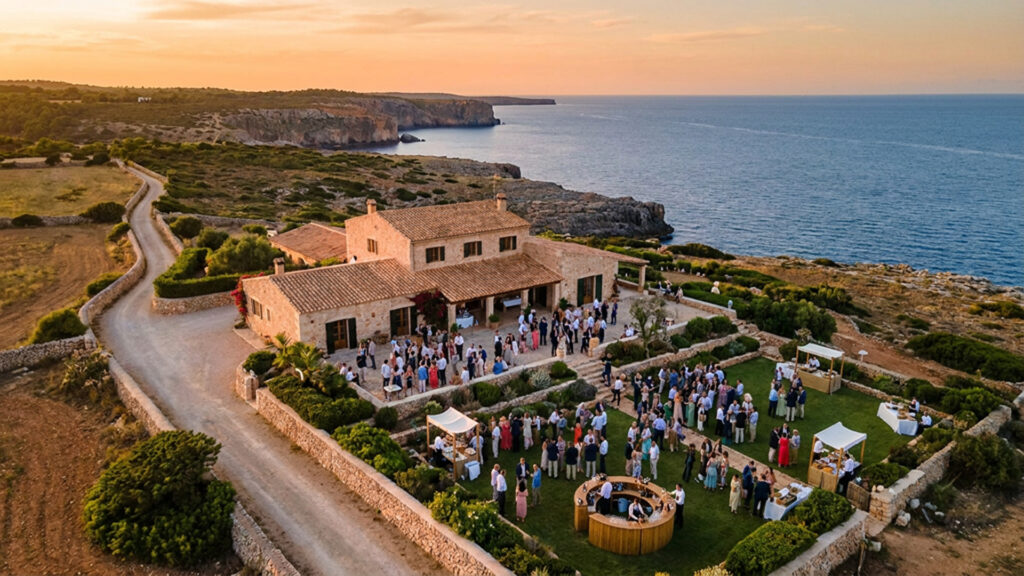
Perhaps the biggest overall difference I’ve noticed is just how much life happens outside.
In the Balearic Islands especially, guests often continue chatting beneath the stars long after dinner has finished.
Coffee. Cocktails. Conversations. Children playing. Friends catching up.
The dance floor may eventually move indoors, but the celebration itself rarely does. There’s a looseness to the evening that’s harder to achieve when everyone moves inside from 8pm onwards.
It’s one of the reasons destination weddings in Spain have such a distinctive atmosphere.
11. Make It Feel Like Spain, Not Home With Better Weather
The best destination weddings I’ve filmed haven’t tried to recreate a British wedding under Spanish sunshine.
They’ve embraced where they are.
Sometimes that’s as simple as serving local wine, choosing a finca instead of a hotel ballroom, giving guests espadrilles instead of flip-flops, or letting cocktail hour become one of the highlights of the day rather than a logistical gap.
But it’s also worth saying: this doesn’t have to be all or nothing.
The most memorable destination weddings usually blend both beautifully. Keep the traditions that matter most to you, whether that’s the speeches, the cake cutting, the first dance, or the music you’ve always wanted. Then borrow a few things from the country that’s hosting your celebration.
Your guests won’t just remember the sunshine. They’ll remember a wedding that felt as though it genuinely belonged there.
Final Thoughts
Getting married in Spain doesn’t mean starting from scratch or reinventing your wedding from the ground up.
It means having access to a different set of ideas, a different relationship with time, and a different way of thinking about what a celebration can be.
Lean into the late evening light. Let the cocktail hour breathe. Embrace the local food. Move the party inside at midnight without drama.
Take what resonates, leave what doesn’t, and give yourself permission to create something that combines the best of both. That’s usually where the most memorable weddings come from.