
Your wedding day will move faster than you can imagine. One moment you’re buttoning up your dress or adjusting your tie, the next you’re saying your vows, and before you know it, you’re on the dance floor wondering where the hours went.
A well-planned timeline won’t slow time down, but it will give you something just as valuable: the space to be present, the breathing room to feel each moment, and the opportunity for your wedding videographer to capture your day authentically. A thoughtfully planned wedding day timeline is one of the biggest factors in creating a natural, emotional wedding film, particularly for UK weddings where light, venues, and travel timings vary so widely.
Having filmed weddings across London, the UK, and Europe, I’ve seen how the right timeline can transform both the experience of the day and the quality of the final film. This isn’t about rigidly scheduling every minute or letting your videographer dictate your day. It’s about understanding how timing affects what can be captured, so you can design a day that feels natural while still getting the film you want.
This guide walks through each part of a typical UK wedding day, offering practical advice on timing, common pitfalls to avoid, and how to create space for the moments that matter most when you watch your film years from now.
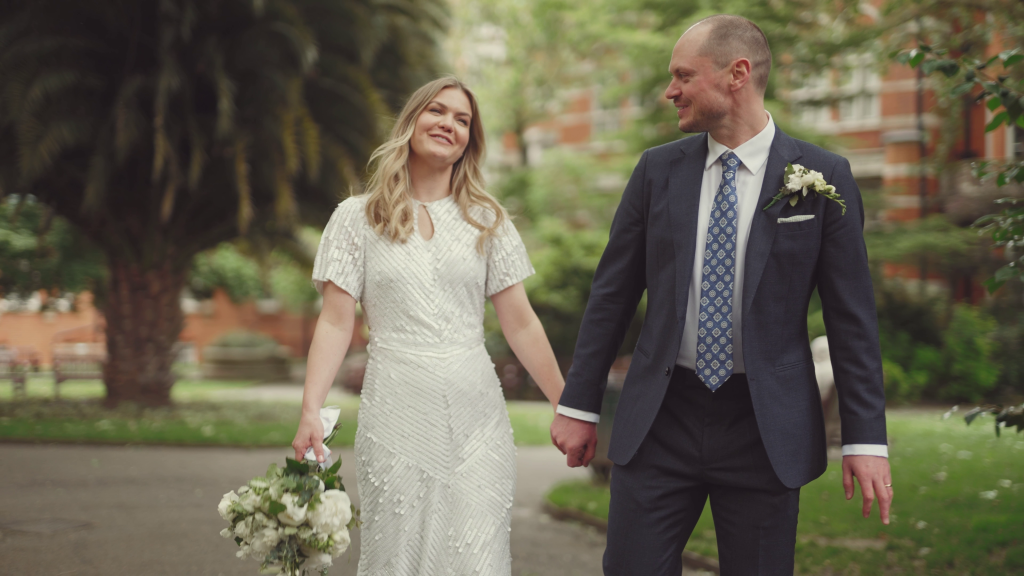
Spring wedding in a London Park
Why Your Timeline Matters for Your Wedding Film
A wedding videography timeline is simply the structure of your day viewed through the lens of filming. It considers light, sound, movement, and emotional pacing, rather than just logistics. When planned well, it allows your wedding film to unfold naturally without the day feeling staged or rushed.
The best wedding films don’t come from videographers controlling the day. They come from couples who’ve thought about pacing, built in breathing room, and made intentional choices about what matters to them.
A rushed timeline doesn’t just affect how stressed you feel – it directly impacts what can be captured. When you’re constantly thinking about the next thing on the schedule, that tension shows on film. When you have space to relax and be present, that shows too.
A well-planned timeline gives you:
Authentic moments over staged shots
When you’re not rushing, genuine interactions happen naturally. Real laughter, spontaneous embraces, and quiet, unguarded moments appear without being forced.
Better light and locations
Certain times of day offer dramatically better light for filming. Understanding when those windows occur, and planning around them, can elevate a film from good to exceptional.
Cleaner, more emotional audio
Timing affects sound just as much as visuals. Quiet moments for letters, speeches before the meal, and avoiding unnecessary movement during key moments all result in clearer, more immersive audio in your film.
Less stress, more presence
You’ll remember your wedding day rather than feeling like you spent it chasing the clock.
Quality over quantity
Fewer moments captured beautifully will always outweigh a packed schedule where nothing gets the time it deserves.
The biggest mistake couples make is trying to fit too much in. If your timeline is planned down to five-minute increments, it’s probably too tight.
Understanding UK Seasonal Timing Considerations
Before diving into specific parts of the day, it’s important to understand how UK seasonal light affects your timeline, particularly if you want outdoor couple shots or natural light during your reception.
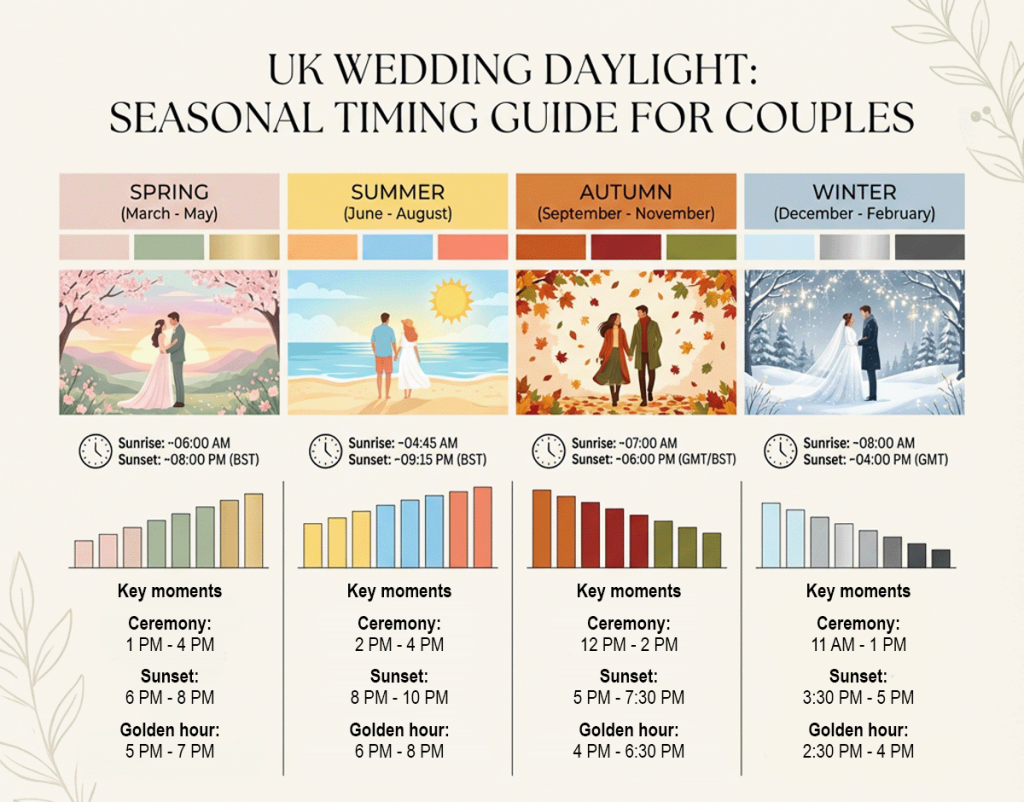
Suggested UK ceremony times for all seasons
Spring Weddings (March–April)
Sunset: Between 6:00pm and 8:00pm
Golden hour: Roughly between 5:00pm and 7:00pm
Considerations: Spring offers soft, flattering light and longer days as April approaches. Weather can be unpredictable, so having a backup plan for outdoor moments is essential.
Summer Weddings (May–August)
Sunset: Between 8:00pm and 9:30pm
Golden hour: Between 7:00pm and 8:30pm
Considerations: Long daylight hours offer flexibility, but midday sun (roughly 11:00am – 3:00pm) can be harsh. Many couples benefit from waiting until early evening for couple shoots when the light is softer and more flattering.
Autumn Weddings (September–November)
Sunset: Between 5:00pm and 7:30pm depending on the month
Golden hour: Approximately between 4:00pm and 6:30pm
Considerations: Short days require careful planning. If golden hour matters, earlier ceremonies (12:00pm–1:00pm starts) help ensure couple portraits happen before daylight fades. Warm coats between shots can make outdoor filming far more comfortable.
Winter Weddings (December–February)
Sunset: Between 3:30pm and 5:00pm depending on the month
Golden hour: Approximately 2:30pm – 4:30pm
Considerations: Short days mean you need to be strategic. If golden hour matters to you, schedule your ceremony earlier (12pm – 1pm start) so couple portraits happen before the light disappears. Consider bringing warm coats for outdoor shoots – you can wear them between shots and remove them for filming.
Key takeaway:
Check sunset times for your exact wedding date and location, then work backwards when planning couple portraits and outdoor moments.
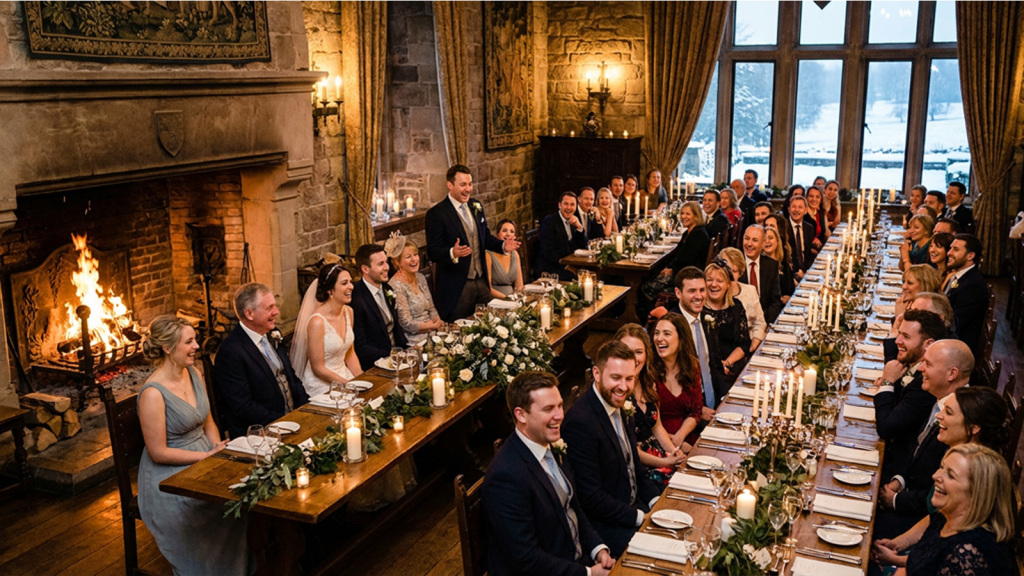
Cosy candlelit wedding at a Scottish castle
Morning Preparations: Setting the Tone
Why morning timing affects the emotional tone of your wedding film
Morning preparations shape the emotional tone of your film. Anticipation, nerves, and excitement are at their peak, and many of the most genuine moments happen here.
Videographers usually arrive during the final stages of hair and makeup or as you’re getting dressed. This captures the energy as everything becomes real without hours of routine preparation footage.
What works well:
Finish hair and makeup around 1.5 hours before you need to leave. This gives you time to get dressed calmly, spend quiet moments with close friends or family, and allows for unhurried footage.
Choose a space with natural light. Large windows make an enormous difference. If possible, avoid dark or windowless rooms.
Keep the space relatively tidy. A quick clear-up helps wide shots feel calm and intentional rather than chaotic.
What to avoid:
Over-scheduling the morning. Packing too many activities into tight windows creates stress early on.
Too many people. Crowded rooms quickly become overwhelming on film.
Overly staged reactions. Forced reveals rarely feel natural. Genuine moments always land better.
First Looks and Pre-Ceremony Moments
First looks, whether with your partner, parents, or wedding party, create intimate moments away from the pressure of the ceremony.
A first look with your partner allows you to see each other privately, calm nerves, and share a genuine moment before the day unfolds. It can also free up time later, which is especially helpful in winter.
First looks with parents or close family members often become some of the most emotionally powerful moments in a wedding film.
If you’re not doing a first look together, exchanging letters to read separately before the ceremony creates quiet, reflective moments with beautiful audio and emotional depth.
Practical advice:
Choose a quiet, well-lit location
Avoid over-choreographing reactions
Allow at least 15 minutes without rushing
Consider sound as well as visuals – quiet spaces matter
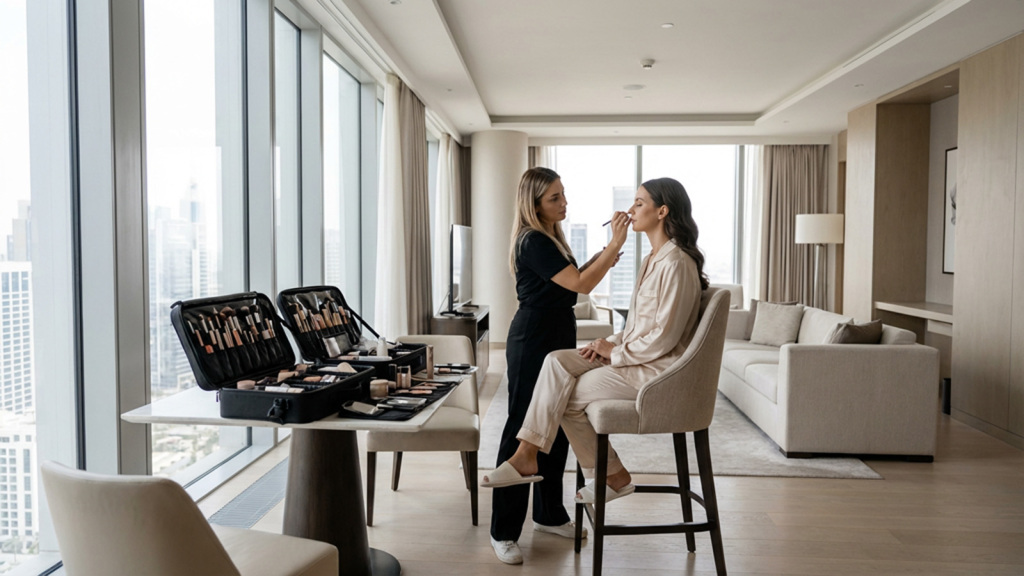
Wedding make-up artist at luxury London hotel
The Ceremony: The Emotional Core of the Day
The ceremony is the heart of your wedding film. Giving your videographer time to prepare ensures vows, readings, and reactions are captured clearly and respectfully.
Church Ceremonies
Churches often involve restrictions and additional setup. Multiple cameras and audio sources need to be positioned in advance, and permissions confirmed.
Arriving at least 45 minutes before the ceremony allows for calm, unobtrusive preparation.
Town Hall Ceremonies
Registry ceremonies are shorter but still require efficient setup, especially in venues with strict time slots. Sharing exact timings in advance helps avoid rushed coverage.
Outdoor and Venue Ceremonies
Outdoor ceremonies are beautiful but unpredictable. Wind, shifting light, and weather changes all affect filming.
What to communicate in advance:
Wet weather backup plans
Seating layout
Whether the ceremony will be amplified
Any unique ceremonial elements
Guest Arrivals and Atmosphere
Guest arrivals add context and energy to your film, but coverage depends on logistics.
One videographer: limited arrival footage
Two videographers: broader coverage of atmosphere, guests, and parallel moments
This is one of the clearest benefits of a second videographer, though it’s not essential for every wedding.
Post-Ceremony: Letting the Day Breathe
The time between the ceremony and wedding breakfast is often underestimated. This is when tension releases and genuine interactions flourish.
Confetti moments work best with good light and clear space
Drinks reception is ideal for candid footage
Family group photos should be kept realistic to avoid long waiting periods
How much time should you allow for couple shots on your wedding day?
Some couples love dedicated portrait time; others prefer minimal interruption. There’s no right answer.
What helps:
Agreeing how much time feels comfortable
Communicating preferred style (walking and talking, quiet moments, lightly guided shots)
Mentioning any locations you’d love to use
A useful approach is to do a short shoot earlier in the day, with the option of additional shots later if energy and light allow. This removes pressure if schedules slip or weather changes.
Travel Time: Be Realistic
One of the biggest timeline pitfalls is underestimating travel.
If Google Maps says 25 minutes, plan for 40–45. Coaches load slowly, guests wander, and traffic is unpredictable, particularly in cities and rural areas alike.
Videographers generally need to arrive before guests to set up calmly. Tight travel windows are one of the fastest ways to introduce stress into the day.
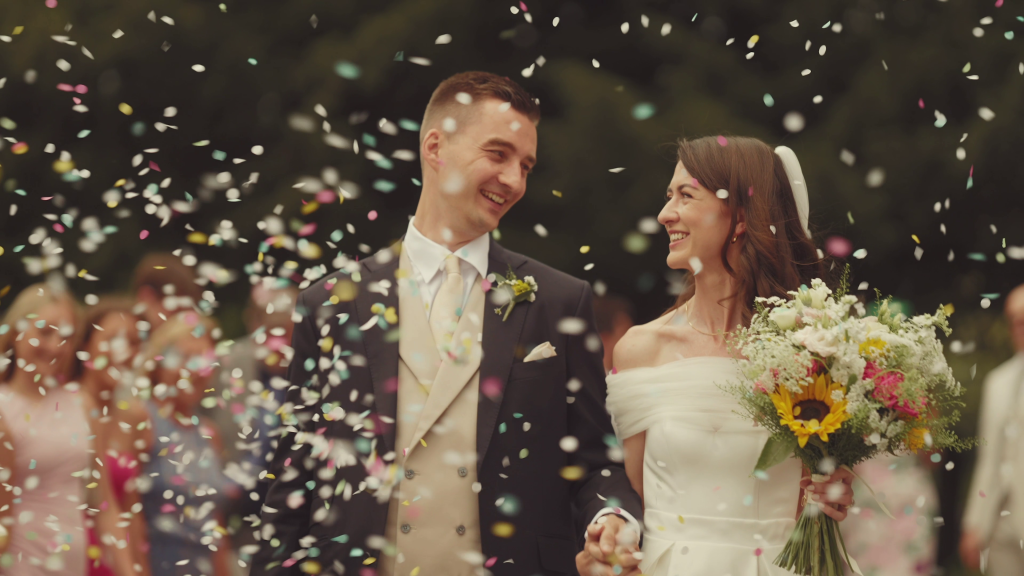
Confetti after a church wedding in Wimbledon
The Wedding Breakfast and Speeches
Speeches: Before or After the Meal?
This is one of the most common timeline questions, and there are strong practical reasons to consider speeches before the meal:
Attention and energy are highest. When you’re announced into the room, everyone is focused, seated, and alert. Starting with speeches captures that energy.
No disruptions. Wait staff aren’t clearing plates, there’s no cutlery noise, and guests aren’t leaving for bathroom breaks or cigarettes. Your wedding videographers can focus entirely on capturing speeches and reactions without navigating around service.
Speakers can relax. Nervous speakers often prefer to “get it done” so they can enjoy their meal rather than sitting through courses worrying about their upcoming speech.
Better audio. Background noise is minimal when everyone’s quietly listening rather than eating, or drinking coffee.
Practical flow. The transition from your entrance to the first speech feels natural, whereas waiting until after dessert can feel anticlimactic.
Some caterers prefer serving the meal first because they know exactly when to begin service (speeches can overrun). But most good caterers will adapt if you explain your preference.
Communicate
Speaking order and rough durations
Where speakers will stand
Any props or surprises
Golden Hour and Blue Hour Options
Golden hour offers warm, flattering light, but its usefulness depends on season and priorities.
In summer, it may fall late into the evening. In autumn and winter, it often aligns beautifully with post-meal timing.
If golden hour doesn’t work, blue hour (just after sunset) can be equally striking, particularly for urban, waterfront, or winter weddings.
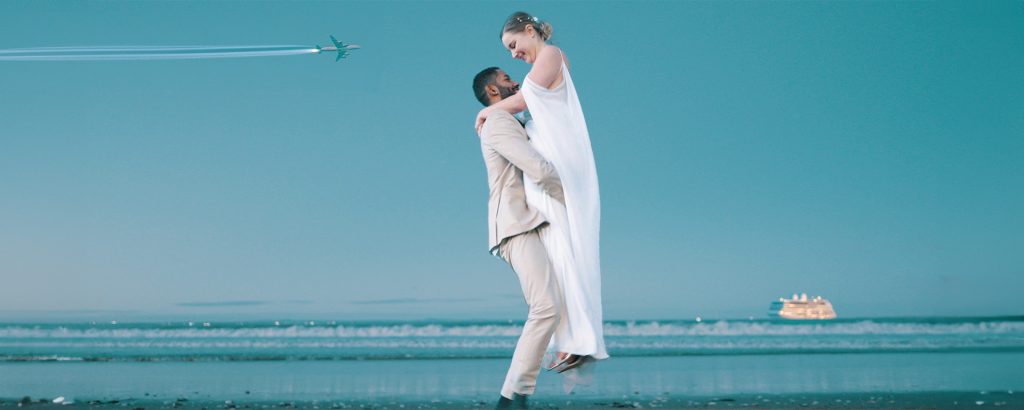
Blue hour wedding couple shoot in Portabello Beach, Edinburgh
The Evening Reception
Cake cutting and first dances work best when kept simple and natural. Many couples flow straight from cake cutting into their first dance, maintaining momentum.
Parent dances and formal moments often work well early in the evening, leaving the rest of the night free for relaxed celebration.
Once the dance floor opens, there’s little to schedule. Spontaneous energy usually produces the most joyful footage.
Common Timeline Mistakes to Avoid
Trying to do too much
Letting others dictate your schedule
Leaving no buffer time
Planning outdoor moments without backups
A spacious timeline always serves you better than a packed one.
A Simple Timeline Sanity Check
Before finalising your plan, ask yourself:
Is the ceremony time realistic for the season?
Are there 15–20 minute buffers between major moments?
Is there at least one quiet, unstructured window?
Have travel times been padded realistically?
Are speeches planned with sound and attention in mind?
Is there a weather backup for outdoor moments?
If the answer is yes, you’re in a strong position.
Final Thoughts: Your Day, Your Way
The perfect wedding timeline isn’t about following a formula or fitting into prescribed time slots. It’s about understanding how timing affects your experience and your film, then making intentional choices that align with your priorities.
What matters is building a timeline that feels spacious rather than stressful, allows for genuine moments, and gives your wedding videographer the opportunity to capture your day as it naturally unfolds.
Remember: your videographer is there to adapt to your day, not to dictate it. But they can offer valuable perspective on what timing works well for filming, where potential issues might arise, and how to create the conditions for beautiful footage without sacrificing your experience.
The best wedding films come from couples who are present, relaxed, and genuinely enjoying their day. And that starts with a timeline that serves you, not the other way around.
The perfect wedding timeline isn’t about following a formula or fitting into prescribed time slots. It’s about understanding how timing affects your experience and your film, then making intentional choices that align with your priorities.
What matters is building a timeline that feels spacious rather than stressful, allows for genuine moments, and gives your wedding videographer the opportunity to capture your day as it naturally unfolds.
Remember: your videographer is there to adapt to your day, not to dictate it. But they can offer valuable perspective on what timing works well for filming, where potential issues might arise, and how to create the conditions for beautiful footage without sacrificing your experience.
The best wedding films come from couples who are present, relaxed, and genuinely enjoying their day. And that starts with a timeline that serves you, not the other way around.