
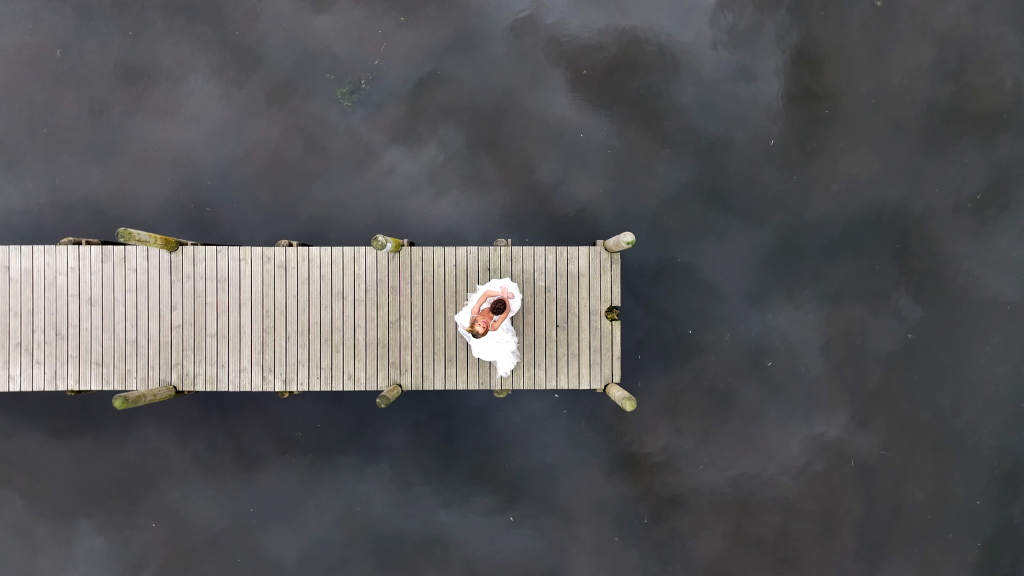
Drones have become one of the most talked-about elements in modern wedding films. For some couples, they represent cinematic luxury and sweeping venue shots. For others, they feel unnecessary or overly complicated.
Having filmed weddings across the UK and internationally for several years, I’ve seen both sides. Drones can elevate a wedding film beautifully when used with purpose, experience, and restraint. They can also add very little if they’re treated as a gimmick or flown without proper planning.
This guide is designed to give you a clear, honest understanding of drones at weddings. What they actually contribute, why they sometimes cost more, the real-world restrictions that affect them in the UK, and how to decide whether they make sense for your wedding day.
Why Wedding Videographers Charge More for Drone Coverage
One of the first questions couples ask is why drone coverage often comes as an add-on, or why prices vary so widely between videographers.
Flying a drone legally and safely in the UK involves far more than just owning the equipment. To operate drones professionally at weddings, videographers must hold the correct CAA permissions, maintain specialist insurance, and complete detailed pre-flight planning for every single location. This includes checking controlled airspace, proximity to airports, local flight restrictions, ground risks, and weather conditions.
There is also the cost of the equipment itself. Professional cinema-grade drones are significantly more expensive than smaller consumer models, require regular maintenance, and are often backed up with redundancy systems in case of failure.
At Momentous Films, drone coverage is handled by a CAA-licensed drone pilot with full operator and flyer ID certification, plus specialist public liability insurance. All permissions, airspace checks, and safety planning are completed well in advance.
From a couple’s perspective, this means peace of mind. From a production perspective, it means extra time, preparation, expertise, and cost before the drone ever leaves the ground.
If you’d like to see how drone coverage affects pricing for your specific wedding, you can add it as an option in our instant quote builder. This gives you a clear, tailored price based on your venue, coverage hours, and the films you’d like delivered.
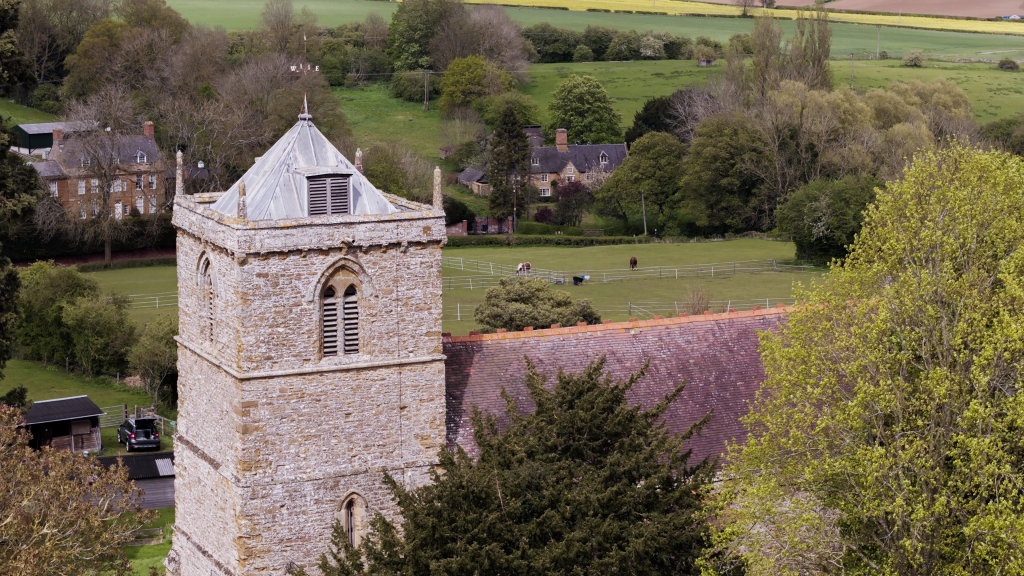
Drone shot of St Michael’s & All Angels Church (Maxstoke) just prior to wedding
UK Drone Restrictions That Can Affect Your Wedding
Drone flying in the UK is heavily regulated to protect the public, property, and other aircraft. These rules impact when and where drones can be used at weddings.
Proximity to Airports and Controlled Airspace
If your venue is near a commercial airport, prison or within controlled airspace, flying may be restricted or require specific authorisation. Areas around Heathrow, Gatwick, London City Airport, and other busy hubs can be particularly challenging.
Even when permission is technically possible, approval timelines and operational limitations can make drone use impractical for a wedding day.
Distance from People and Crowd Considerations
UK regulations require keeping drones at a safe distance from people who are not directly involved in the flight. The specific distances depend on the drone’s weight and class:
For drones under 250g (or UK0/UK1 class): These can be flown over people who are not directly involved, provided you don’t fly over crowds and take reasonable precautions not to endanger anyone.
For larger drones (over 250g): Unless you hold an A2 Certificate of Competency, you must generally maintain at least 50m horizontal distance from uninvolved people. With an A2 CofC and appropriate equipment, this can be reduced to 30m, or even 5m in specific low-speed modes.
At weddings with large guest numbers, this often means larger drones can only be flown when guests are indoors, positioned safely away from the flight area, or when the pilot has advanced qualifications allowing closer operations.
This is why drone footage is usually captured either earlier in the day, between key moments, or at carefully chosen times when guest movement is predictable.
Indoor Flying
Indoor drone flights are treated differently under UK rules, but that does not automatically make them suitable for weddings. Indoor flights require specialist skill, additional safety planning, and venues that can physically accommodate them. In most cases, they are neither practical nor necessary.
Recent Regulatory Changes (January 2026)
From 1 January 2026, several significant changes came into effect:
Lower registration threshold: The requirement for a Flyer ID now applies to drones 100g and above (previously 250g). Drones 100g and above with cameras also require an Operator ID.
UK class markings: New drones sold in the UK now carry UK class marks (UK0-UK6) rather than EU C-class marks, though existing EU C-class drones will be recognised as equivalent until 31 December 2027.
Remote ID requirements: UK class-marked drones (UK1, UK2, UK3, UK5, UK6) must broadcast Remote ID when flying. Legacy drones 100g and above with cameras will also need Remote ID compliance, either built-in or via approved add-ons.
Night flying requirements: All drones flown at night must now display a green flashing light to improve visibility.
These changes don’t fundamentally alter wedding drone operations for professional operators who were already compliant, but they do tighten accountability and tracking requirements across the board.
The key takeaway remains simple: drone use is never assumed. Every wedding and venue must be assessed individually based on current regulations.
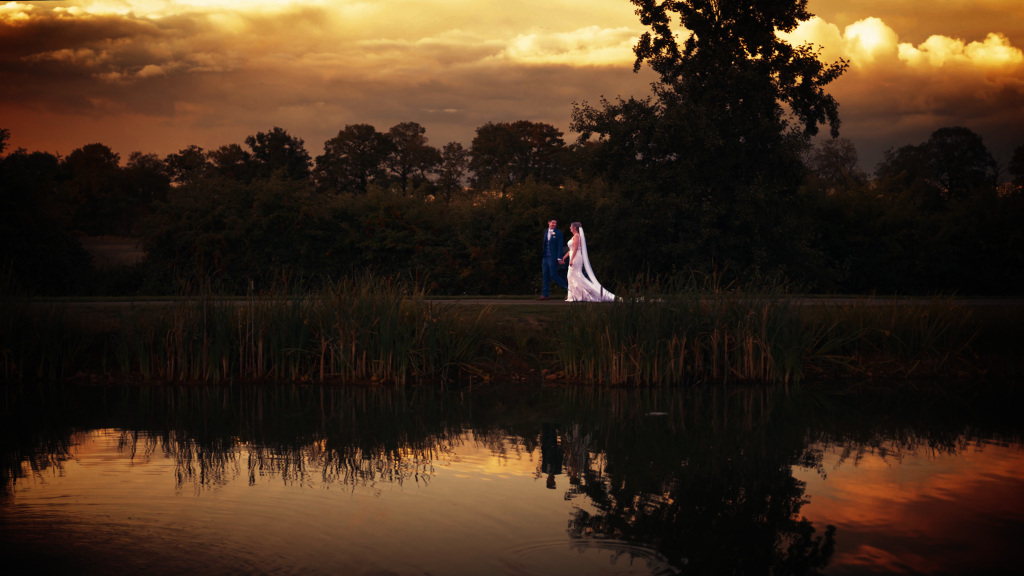
Drone with green lights capturing sunset shot of couple at Alrewas Hayes
What You Should Check Your Videographer Has
If you’re considering drone coverage, it’s worth checking your videographer has the proper qualifications and permissions in place:
CAA Flyer ID and Operator ID – For commercial drone operations, these are legal requirements in the UK. Your videographer should hold both. The Flyer ID demonstrates they’ve passed the CAA theory test, while the Operator ID shows they’re registered as the responsible party for the drone.
Public Liability Insurance – Commercial drone operators must have specialist third-party liability insurance covering flights at wedding venues. This is a legal requirement for any commercial flying.
Pre-flight Planning – Professional operators check airspace restrictions, flight permissions, and safety considerations for each wedding location. This planning happens well before your wedding day, so you can have confidence everything has been properly assessed.
Equipment and Backup Systems – Experienced operators carry backup drones, batteries, and redundancy systems in case of technical issues during your wedding.
You don’t need to become an expert in CAA regulations, but asking “Are you fully licensed and insured for commercial drone operations?” is a fair and sensible question.
For more guidance on what to ask when choosing your videographer, see our complete guide: How to Choose the Right Wedding Videographer.
Working Around Airport Restrictions - Real Example
Not every venue with airspace restrictions is automatically off-limits, but it does require planning and realistic expectations.
At a recent wedding at Caswell House near Brize Norton, we had to request permission from the RAF base. Understandably, they couldn’t give advance approval, but they were very helpful and suggested we call on the day to check.
This left the couple with a choice: commit to having a drone pilot on standby without guaranteed flight permissions, or skip drone coverage entirely. They chose to go ahead, and it paid off. We were given permission to fly and captured some beautiful footage of the estate and surrounding countryside.
There are several venues near regional airports where we follow a similar process, calling ahead on the day to confirm permissions. This wouldn’t be practical near major hubs like Heathrow or Gatwick where it’s much busier, but for smaller airports and military airfields, it’s often possible with the right approach and a bit of flexibility.
The key is being honest with couples about what’s guaranteed versus what’s probable.
Small Drones vs Larger Cinema Drones Explained Simply
You may have heard references to “under 250g drones” versus larger professional drones. Here’s what that actually means for your wedding film.
Small drones under 250g are lighter, quieter, and subject to fewer restrictions in certain environments. They are useful when space is limited or where stricter rules apply.
However, their cameras are physically much smaller. This affects image quality, especially in lower light, high contrast scenes, or when blending footage with professional ground cameras.
Larger cinema drones carry bigger sensors and higher-quality lenses. This allows for better colour depth, smoother motion, improved dynamic range, and footage that matches seamlessly with high-end wedding films.
Our drone pilot generally flies a DJI Mavic 4 Pro Cine for its cinema-quality sensor and seamless integration with our ground cameras, but we also carry smaller drones when restrictions or locations require a more compact solution. The choice is always dictated by what works best for the venue and the final film.
How Drones Actually Elevate a Wedding Film
When used thoughtfully, drone footage does far more than provide a single aerial shot.
Establishing the Sense of Place
A drone can reveal the scale and setting of your venue in a way no ground camera can.
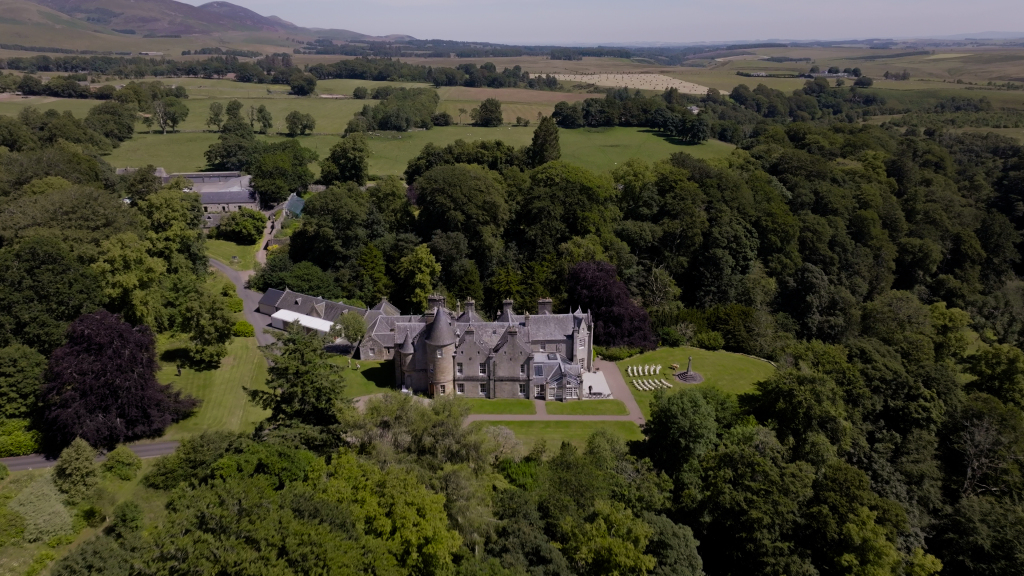
Establishing shot of Newhall Estate near Edinburgh
Transitions That Feel Cinematic
Drone shots work beautifully as visual transitions, for example moving from ceremony to drinks reception, or day to evening.
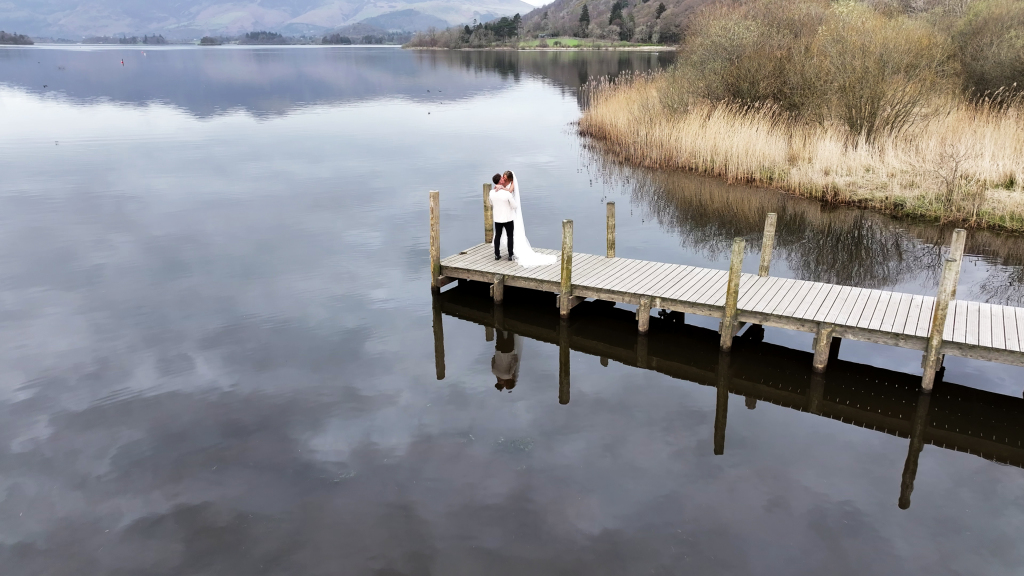
Couple enjoying the moment after their Lake District wedding
Creative Couple Moments
Beyond wide establishing shots, drones can also be used to capture very specific, intimate moments in a way that feels natural and unforced.
A personal favourite example is during the drinks reception, when couples sometimes step outside to practise their first dance together. From above, on a sunny day, the drone can capture the couple moving together while their shadows stretch and dance across the ground, creating a beautiful, graphic image that feels both cinematic and quietly personal. See this viral wedding clip on the Momentous Films TikTok account captured during Amber and Dan’s wedding, which has now had over 150,000 views.
Because the camera is positioned well above the couple, there’s no sense of being watched or performed for. Couples tend to relax into the moment, which often results in footage that feels more genuine than something staged for a traditional camera.
These kinds of shots only work in the right conditions and with careful timing, but when they do, they add a layer to the film that couldn’t be captured any other way. They’re not about spectacle. They’re about seeing a familiar moment from a fresh perspective.
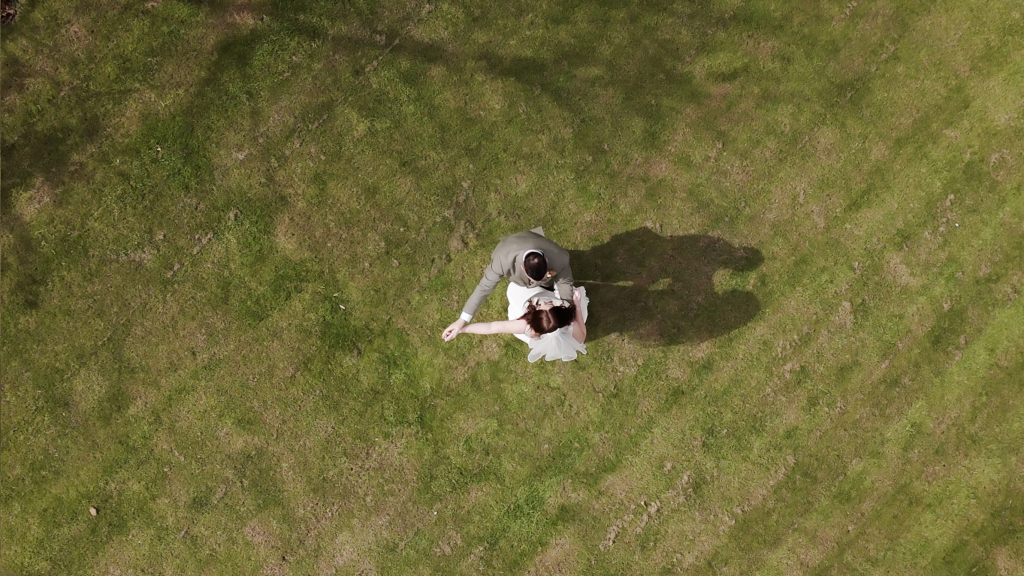
Viral wedding drone shot with dancing shadows
Context and Atmosphere
Drones help tell the wider story. The location, landscape, weather, and environment all become part of the narrative, rather than just a backdrop. The key is restraint. A few well-chosen drone shots are far more powerful than constant aerial footage.
Weather and What Happens If Flying Is Not Possible
Weather is one of the biggest variables in drone use. Wind, rain, fog, and rapidly changing conditions can ground even the most capable equipment.
When this happens, having a dedicated drone pilot means flexibility rather than disappointment.
If conditions improve later in the day, flights can often take place during a different window. If flying is not possible at all, our drone pilot at Momentous Films will switch roles and capture additional ground footage, details, atmosphere, and moments that strengthen the overall film.
From a couple’s perspective, this means drone coverage is never a wasted investment when handled properly. It simply shifts how value is delivered.
When Should You Actually Have Drone Coverage at a Wedding?
Drones aren’t right for every wedding, and that’s perfectly fine. Here’s how to think about whether they make sense for yours.
Drones tend to add genuine value at:
- Rural venues, estates, and countryside locations where scale and setting are part of the story
- Coastal weddings or venues with dramatic landscapes that benefit from aerial perspective
- Barn weddings, castles and historic properties where the architecture and grounds create visual context
- Weddings with space to fly safely away from large concentrations of guests
Drones are often less practical (or impossible) at:
- Central London locations with heavy controlled airspace and minimal safe flying zones
- Venues very close to major airports like Heathrow, Gatwick, or Stansted where restrictions are strict
- Tight urban environments with limited take-off areas and privacy concerns from neighbouring properties
This doesn’t mean drones are never possible in challenging locations. But expectations should be realistic, permissions should be checked early, and you should have a backup plan if flying isn’t approved.
If you’re unsure whether your venue suits drone coverage, share the location with your videographer early in the planning process. They can assess feasibility and give you an honest answer before you commit.
For help planning your wedding day timeline to make the most of drone coverage windows, see our guide: How to Plan Your Wedding Day Timeline for the Best Wedding Film.
Editing: Making Drone Footage Feel Seamless
One of the most overlooked aspects of drone use is what happens in the edit.
With a professional editor and colourist, high-end drone footage can be blended with professional ground cameras because the colour, contrast, motion, and image quality match. This allows drone shots to feel like a natural extension of the film rather than a visual interruption.
Footage from very small sensors can feel noticeably different. Colours may not match, highlights may clip, and motion can appear jittery when cut alongside cinematic ground footage.
A skilled editor can mitigate some of this, but starting with better footage always produces a better result.
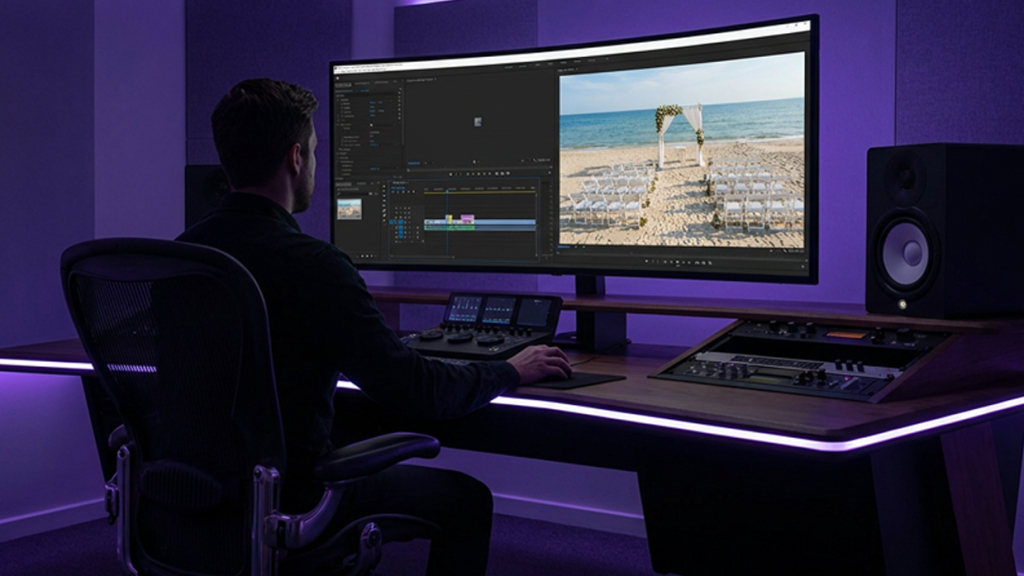
Editor at Momentous Films working a wedding film
Destination Weddings and Drones
Drone licences are country-specific. UK pilots cannot legally fly abroad using their UK certification alone.
For destination weddings, the safest and most professional approach is to partner with trusted local drone pilots who are fully licensed and insured in that country. This ensures compliance with local laws while maintaining the quality and style of the final film.
When managed well, drone footage captured abroad can still integrate seamlessly into your wedding film.
Final Thoughts
Drones aren’t essential for every wedding, but when used thoughtfully and legally, they can elevate a wedding film in subtle, meaningful ways.
The real value isn’t in the drone itself, but in the experience behind it. Knowing when to fly, when not to, how to plan around restrictions, and how to integrate aerial footage into a coherent story.
If you’re considering drone coverage, the most important question isn’t “Do they offer drones?” but “Do they know how and when to use them well?”