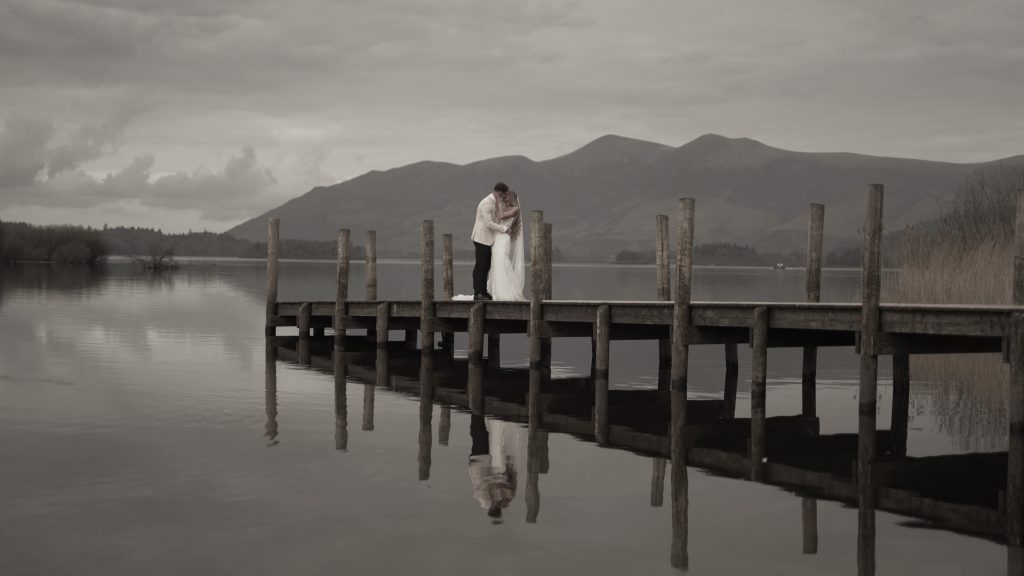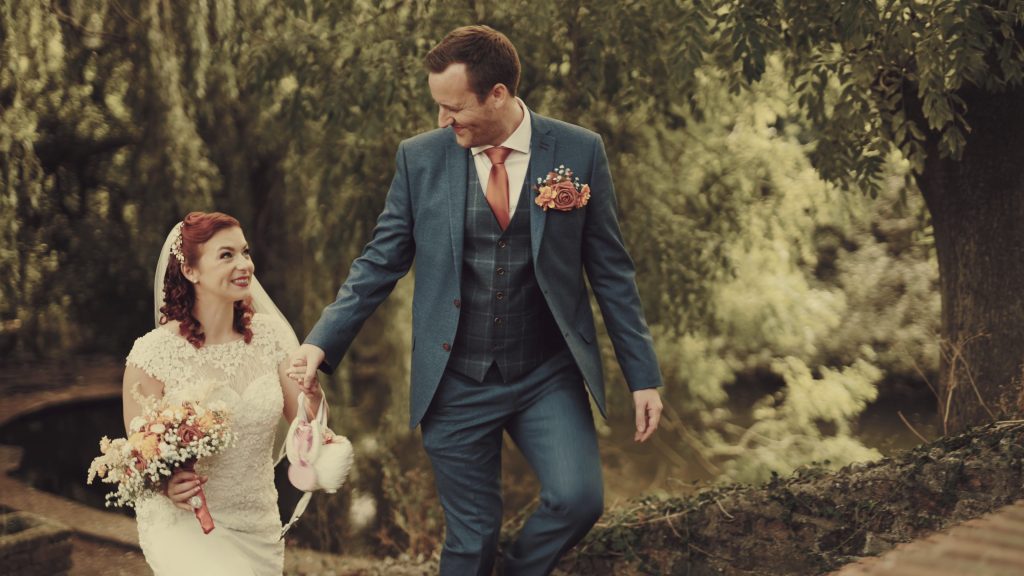
Spoiler: For many small, single-venue weddings, one videographer is fine. But there are common scenarios where hiring a second, and sometimes a third videographer brings clear benefits. In this article I’ll walk you through those scenarios, explain the practical reasons why extra crew help, and answer the concerns couples often raise about having more people on the day. Skip to the end of the article if you’d like a quick summary.
I’ve filmed hundreds of weddings across the UK and Europe and worked on professional film sets, so I’ll draw on that experience as we go. This is practical advice which is to help you decide what coverage makes sense for your day and your budget.
Why one videographer can work (and when it doesn't)
When one is enough
For small weddings where everything happens at the same venue (morning preparations, ceremony, reception and dancing), one experienced videographer will often be able to capture the day well. If both partners are in the same building or close by, a single videographer who plans well can gather the key moments without a big footprint. The benefits are obvious: lower cost and simpler logistics.
When one falls short
A single operator cannot be in two places at once. Weddings are full of parallel moments: one partner opening a gift while the other reads a note, guests reacting at opposite sides of the room, or readings that happen away from the couple. If your day involves simultaneous moments that you want captured in full, a single videographer will have to choose which ones to film and some things will be missed. That is where a second crew member adds real value.
Two videographers: where they help most
Getting ready in different locations
If you and your partner are spending the morning of the wedding at different locations, a second videographer makes a big difference. Practically, it means:
- You capture both sides of the morning preparations footage: details, reactions, conversations and the small moments that editors intercut to build a complete morning story.
- You collect authentic audio from both partners. Reading notes from each other and candid lines add emotional anchors for a story-led film.
- You avoid rushed travel or compromises where one partner’s preparation is missed because the videographer has to travel to the other location.
Couples often tell me that prep footage from both sides becomes some of the most treasured material in their film.
Church ceremonies and large sanctuaries
Churches and large ceremonial spaces frequently benefit from two videographers. Ceremonies can involve processions, readers at a lectern and movement that takes place on different axes. Practically this looks like:
- One camera positioned to cover the couple and altar closely, the other covering readings or the lectern so that nothing important is out of frame.
- Static cameras used for wide framing while an operator moves for intimate reaction shots. Remember, cameras can be static; videographers will operate or monitor them as needed.
- When we operate with two cinematographers we often position one on each side of the centre aisle. That avoids needing to cross the aisle and keeps movement discreet and respectful of the venue.
Experienced filmmakers repeatedly point out that multiple operators reduce the risk of missing ceremonial moments and give editors options to cut between angles without losing continuity.
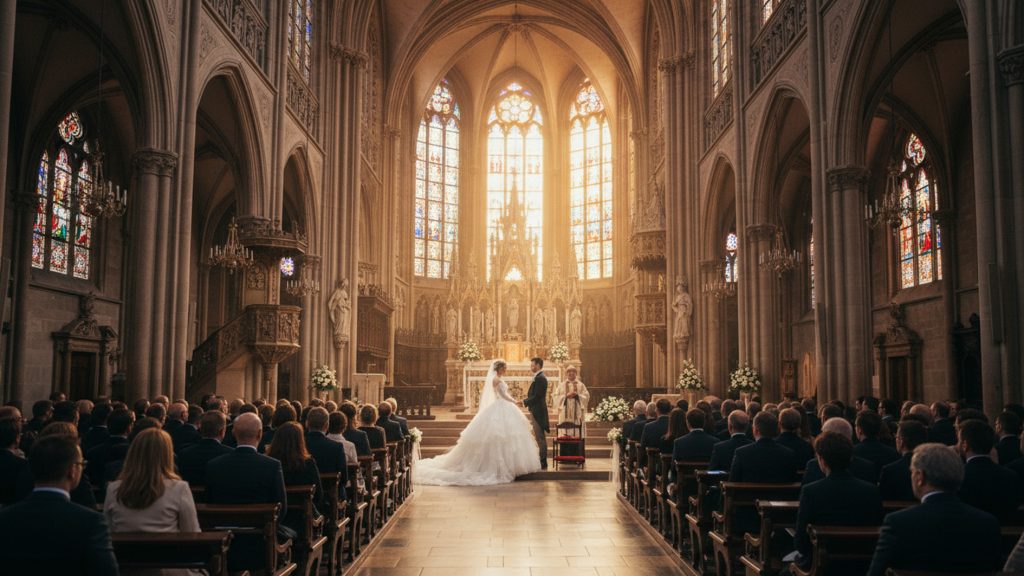
Large cathedral wedding discreetly filmed by 3 videographers
Larger guest lists and guest coverage
When guest numbers grow past roughly 100, the chances of meaningful reactions and unscripted moments increase. A second videographer helps capture these moments while the lead stays focused on the main action. For example:
- One camera can concentrate on the couple while the other moves through the room to capture parent reactions, friends’ laughter and candid interactions.
- During speeches, one camera can stay on the speaker and the other capture the audience’s response — those reaction shots are what make a speech feel alive in the edit.
- On the dancefloor, splitting responsibilities lets one operator film the couple closely while the other captures the energy around the room.
Three or more crew: when and why you might need them
Most weddings are well served by two videographers, but some days genuinely benefit from a larger team. Think about adding crew if you have:
- More than 200 guests or a very large venue that requires multiple vantage points to capture scale and atmosphere.
- Multiple locations with tight transition times — for example, getting ready in two places, a ceremony several miles away and a reception at a different venue.
- A complex schedule with simultaneous events, multiple ceremonies or coverage that starts early and finishes late.
- Specific technical needs, such as UAV aerials, live sound monitoring or additional static cameras for uninterrupted wide coverage.
Additional specialised roles help in practical ways:
- Drone pilot – a dedicated pilot focuses on aerial composition and safety, freeing the main crew to concentrate on the human moments on the ground.
- Sound engineer – for weddings with many speeches or readings, a sound tech monitoring levels live reduces the risk of clipped or noisy audio and ensures every voice is captured clearly.
- Assistant – an assistant manages spare batteries, static cameras and quick kit changes, keeping the film crew productive and reducing downtime.
These extras increase cost, but they also increase redundancy and creative options. They reduce the chance of missing key moments and let the main filmmakers focus on composition and storytelling rather than technical tasks.
Is the number of cameras equal to the number of crew?
Typically there will be one camera operated by each videographer / drone pilot, plus an extra static camera which will be set up on a tripod and rolling, usually on a wide angle, to capture an additional angle. This is particularly useful during the speeches, ceremony and sometimes the first dance. Below shows how the number of camera sources maps to the number of crew.
| Number of crew | Number of camera sources |
|---|---|
| 1 videographer | Usually one operated camera plus a static camera during the ceremony, speeches and first dance. |
| 2 videographers | Commonly 3 camera sources: one camera per videographer, plus a static third camera for key parts of the day. One camera source could be a drone. |
| 3 videographers | Typically 4 camera sources: one operated by each videographer plus an additional static camera. One may be a drone camera. |
In addition to this, some videographers may offer a nostalgic camcorder or vintage Super 8 camera to use at certain parts of the day, such as on a couple shoot around the venue, or on the dancefloor, giving an additional source with a distinct retro vibe.
Generally speaking, more camera angles mean more editorial choices, which improves pacing and increases the chance of catching genuine emotion and detail.
Will multiple crew feel overwhelming?
This is one of the most frequent concerns I hear. The short answer is: not if the team is experienced and well coordinated. Here is how I ensure the presence of extra crew remains discreet and natural:
- Discreet placement of static cameras: static cameras are positioned where they provide coverage without being in the way. They film wide angles and remain unobtrusive.
- Operators using distance and longer lenses: roaming videographers often work with longer lenses so they can capture close-feel shots from further away without intruding.
- Early coordination with your photographer: a quick briefing before the day ensures photographers and videographers know each other’s preferred positions and timings, preventing clashes.
- Defined roles: we agree who covers prep, who stays wide and who captures reactions so crews don’t overlap or crowd each other.
Cost and value considerations
Adding an additional videographer increases cost, but it is often the most cost-effective way to improve storytelling. When deciding whether to add crew, consider:
- Which parts of the day you value most – prep on both sides, ceremony coverage, speeches or guest reactions.
- Whether you have venues, timings or guest numbers that make single-operator coverage risky.
- Which extras deliver the most value – for example, a second shooter often adds more usable footage than a single extra drone flight.
Ultimately the question is less about “how much” and more about “what for”. A second shooter is an investment in narrative depth and redundancy – it helps ensure the film tells your day fully.
Practical tips for working with multiple crew
If you decide that extra videography makes sense, these steps keep the day smooth and unobtrusive:
- Share a schedule of key moments with your team – ceremony, speeches, first dance and any must-have shots.
- Introduce your photographer and the videography team before the wedding so everyone can coordinate positions and movement.
- Ask the videographer how the team splits responsibilities – who stays wide, who follows reactions and who monitors static cameras.
- Check venue movement rules early – some churches or historic venues restrict where crew can stand.
- Decide on audio coverage in advance – extra speakers usually mean you will benefit from a dedicated sound technician or additional mics.
- Clarify deliverables up front – how many edited films, social reels and whether raw footage is available as an extra.
Final thought
Choosing whether to hire one, two, or more videographers comes down to the story you want captured and the practical logistics of your day. For many couples two videographers are the sweet spot – they provide layered storytelling without an overblown crew. For very large, multi-location or multi-day celebrations, a third crew member or specialised roles like a drone pilot or sound engineer are worth considering. Use the guidance above to match your priorities to the coverage that will produce the film you really want.
Quick summary: when to consider extra videographers
| No. of crew | Type of wedding |
|---|---|
| One videographer | Sufficient for intimate weddings (under 80 guests) that take place at a single venue where prep, ceremony and reception are all close by. |
| Two videographers | Worth considering when you and your partner get ready in different locations, when the ceremony is in a church or sanctuary, when you have more than 100 guests and want broader guest coverage, or if you want more angles for speeches and first dances. |
| Three or more crew | Makes sense for very large weddings (200+ guests), multi-site days, complex schedules, or productions that require extended coverage and creative flexibility. |
Frequently Asked Questions
If your day involves multiple locations, separate locations for the morning preparations, a church ceremony or more than about 100 guests, additional videographers almost always add significant value. They provide additional angles, cameras, reaction coverage, redundancy and quicker setups, which together make your final film richer.
Typically two videographers equates to three camera sources: one camera per operator plus a static third camera for wide coverage. That third camera gives editors a constant wide reference that helps keep the story coherent.
Some couples choose to adjust photographer coverage to balance budget and on-day footprint, but it is not necessary. The key is coordination - if photographer and videography teams plan positions and movement beforehand, everyone can work together without interference.
In most cases, this is not a necessity as your wedding videographer will set up your audio prior to the ceremony and speeches. You may want to consider someone dedicated to this role if you are having many speeches requiring multiple guests to be set up with lapel microphones, or if you would like the microphones to be hidden under clothing. Having a sound engineer means there's someone dedicated to monitoring the audio live and making adjustments in real time to ensure every voice is recorded as clearly as possible for the final film.
Clear communication fixes this. I always contact the lead photographer ahead of the wedding to agree positioning and to ensure we coordinate things. When teams brief each other early, clashes rarely happen.